
Day 5: Xian to Chongqing, Thursday 25th September 2025
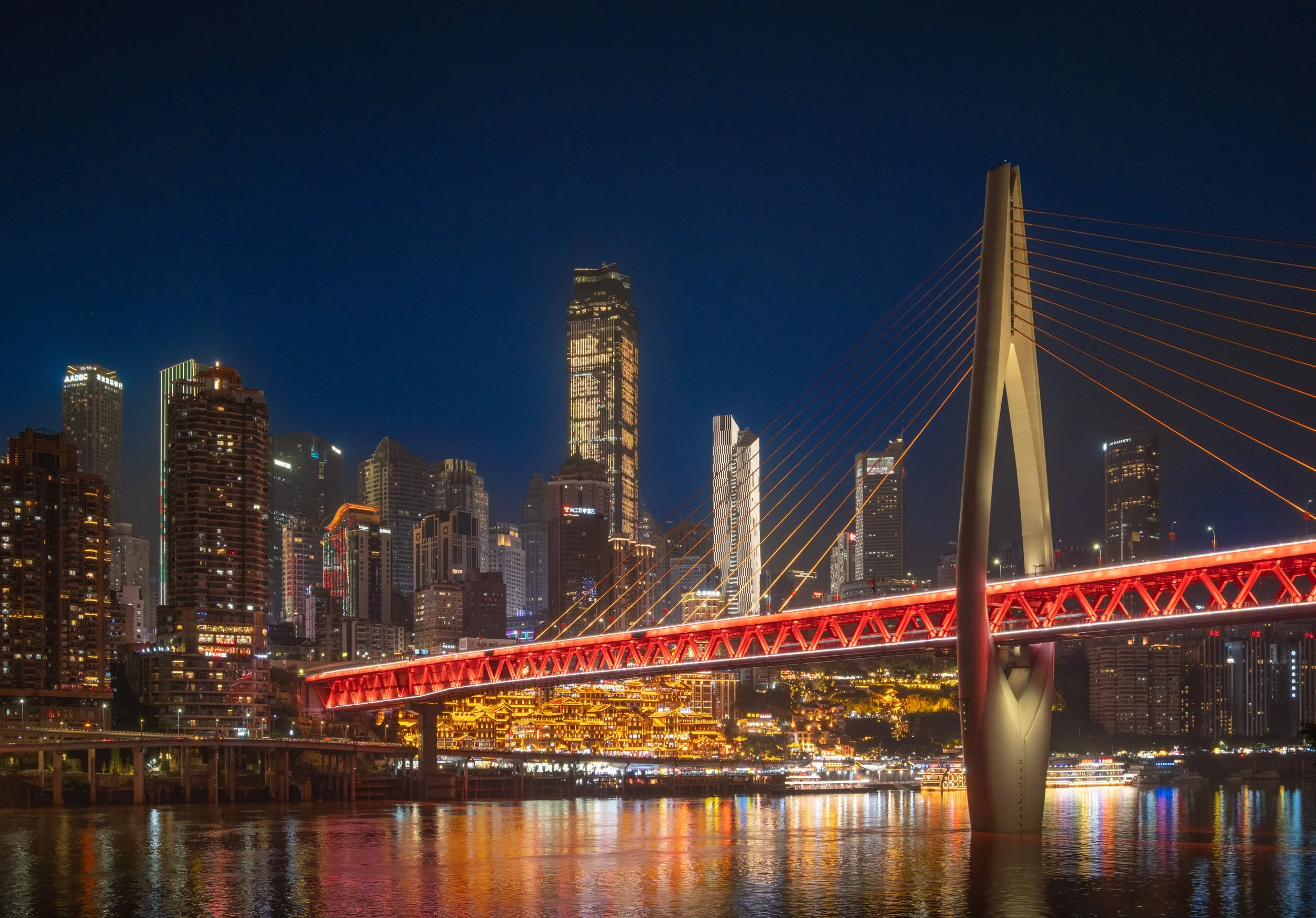
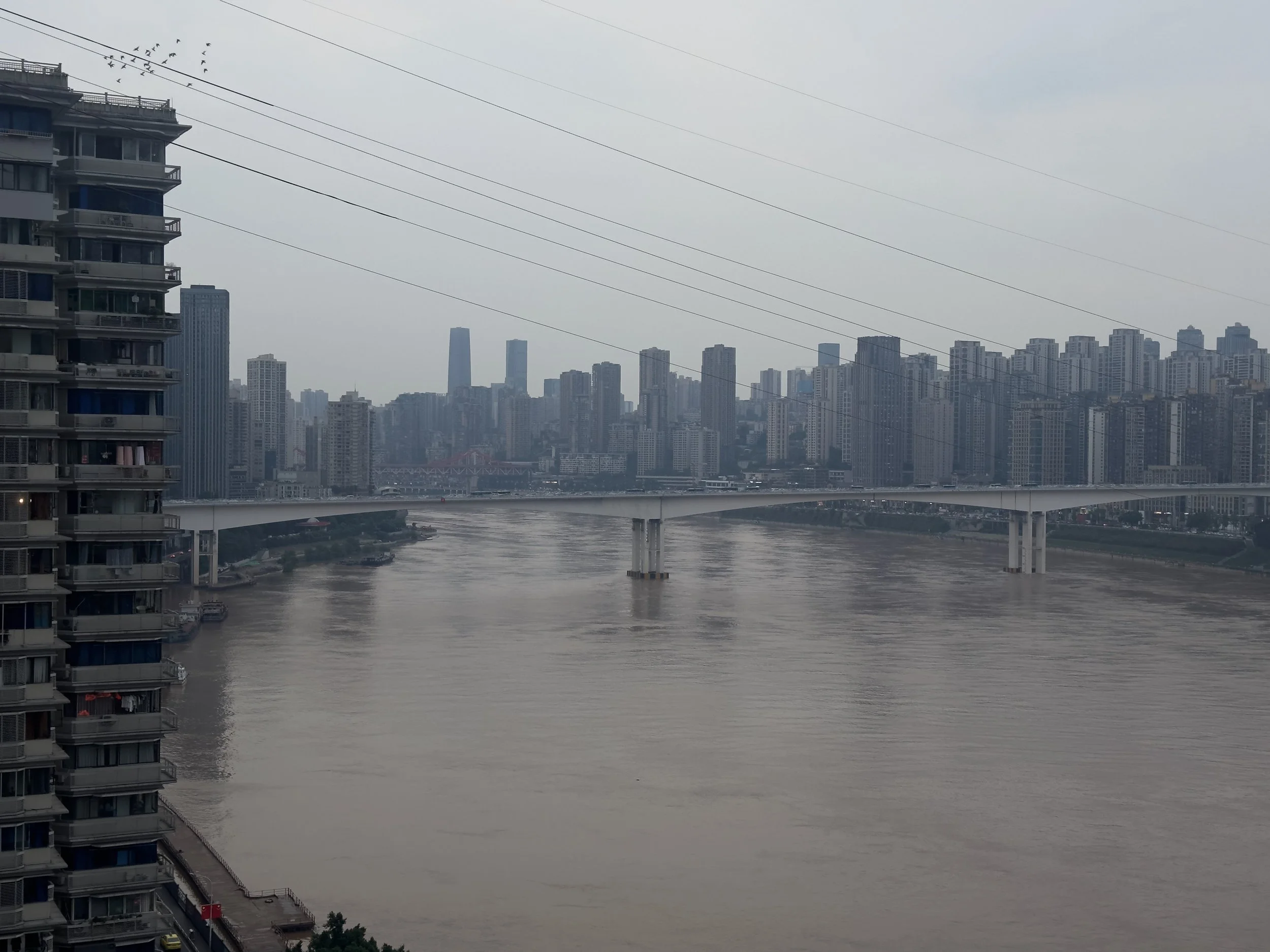
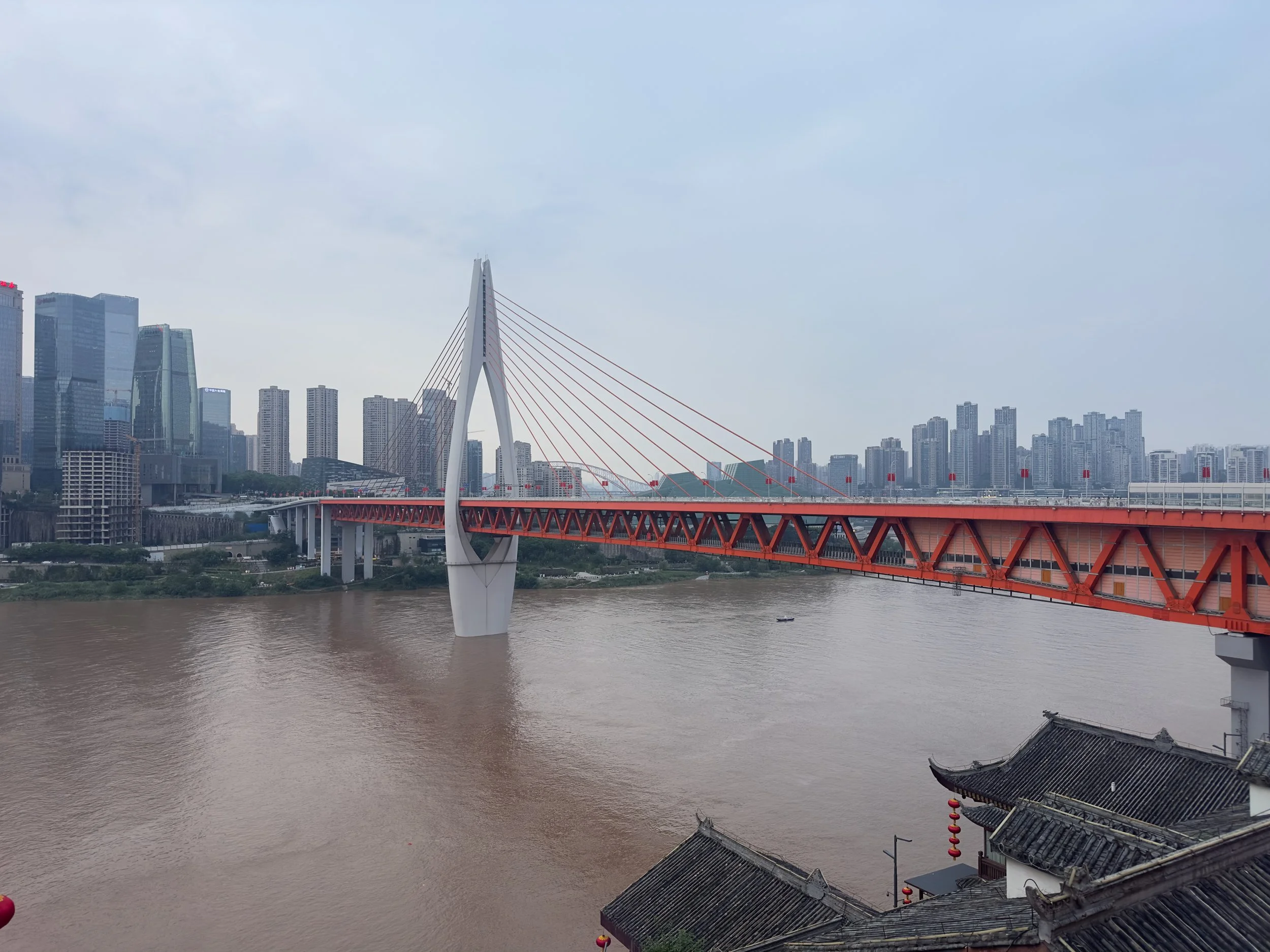
Qiansimen Bridge, Jialing River and Chongqing Downtown beyond
Very misty in Xian, 27°, cloudy/drizzle in Chongqing
NZ$1 = Y4
Y1=NZ$0.25
Up at 6am, packed and left at 6:30am ( the hotel served breakfast from 7am so we hoped to get something at the station ).
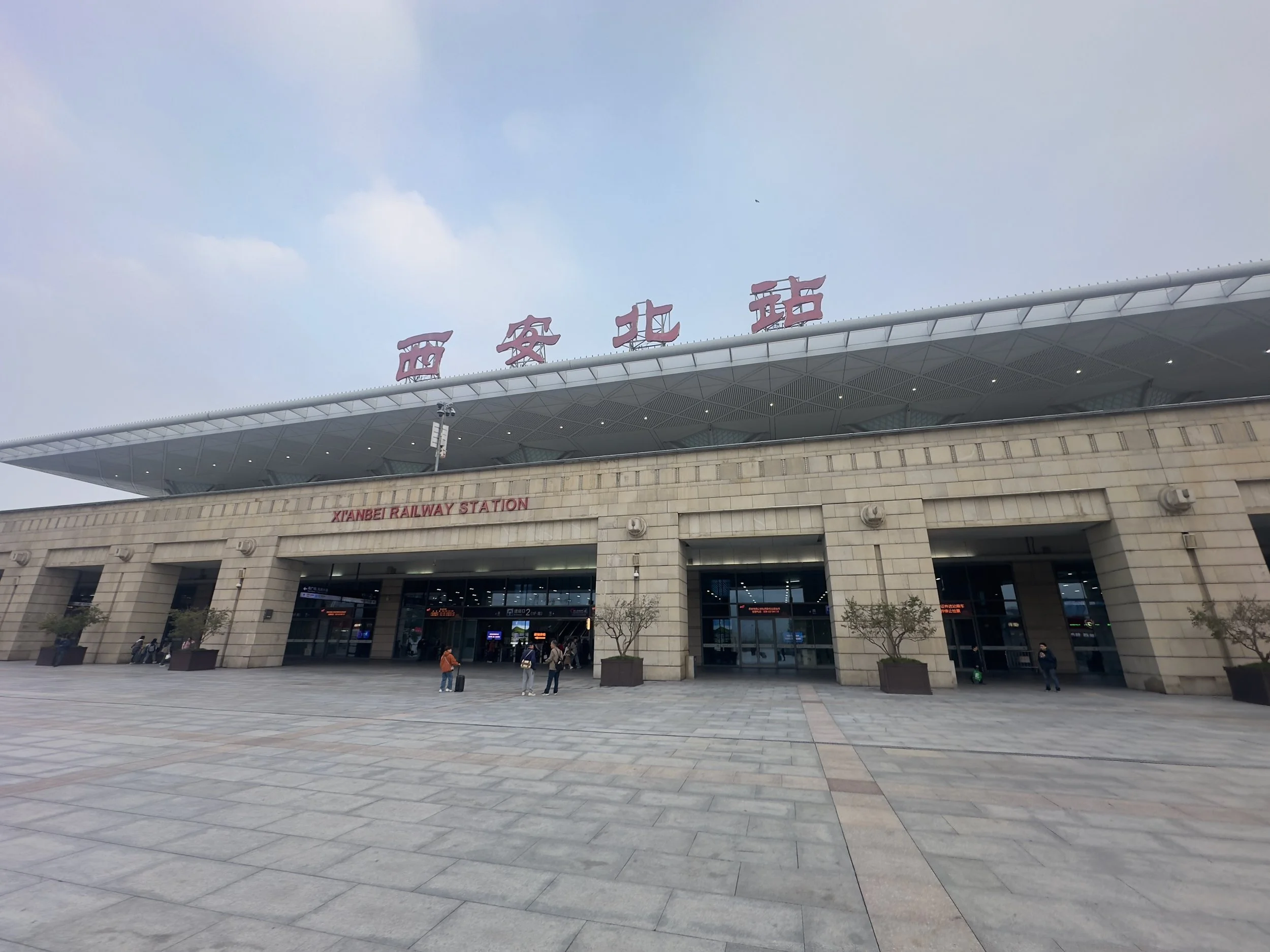
Down to the metro then no 2 line to Xian North Station ( Xianbeizhan ), arriving at 7:15am, up to the station. As we would find through the rest of the trip the exit from the metro stations at train stations takes you up outside the train station building itself ( presumably for security reason, but also so you can see the grandeur of the station building ) and then you enter the main entrance of the station. We headed into the station, through ticket check and security and up to the concourse. This modern station is huge and is a bit different to Shanghai station in that the whole concourse is one big open space with with the train line running underneath, and gates/escalators down to the platforms at regular intervals.
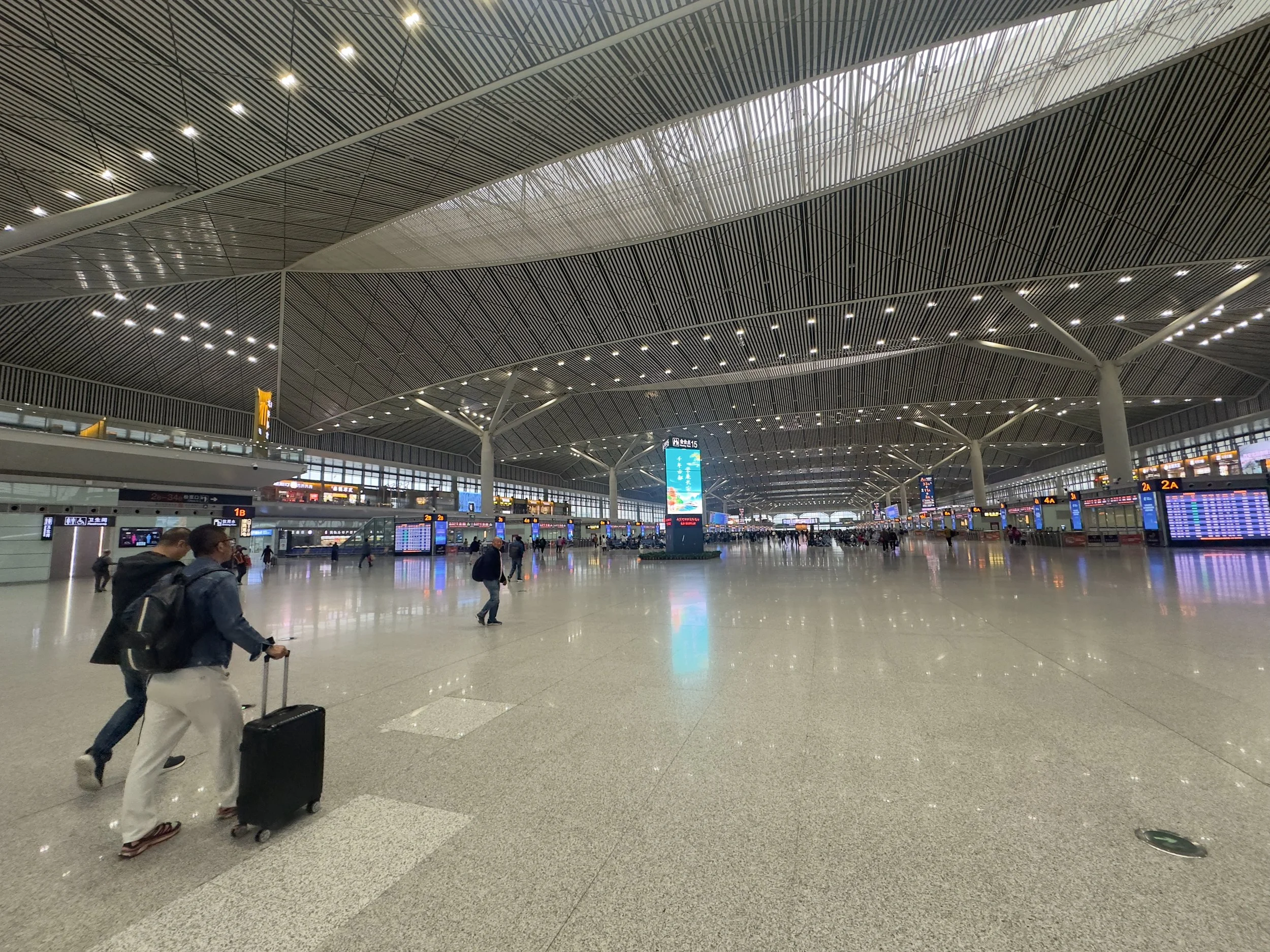
We found a McDonalds ( yeah, I know, but it is a familiar thing and was convenient ) for breakfast on the mezzanine floor above the concourse. We ordered at the kiosk ( in English of course, sausage egg McMuffins and coffee/matcha, Y84 ) and ate at the seating area. Down to the concourse to get snacks at a convenience store ( bread rolls, chips etc ) then sat and waited for our gate to open.
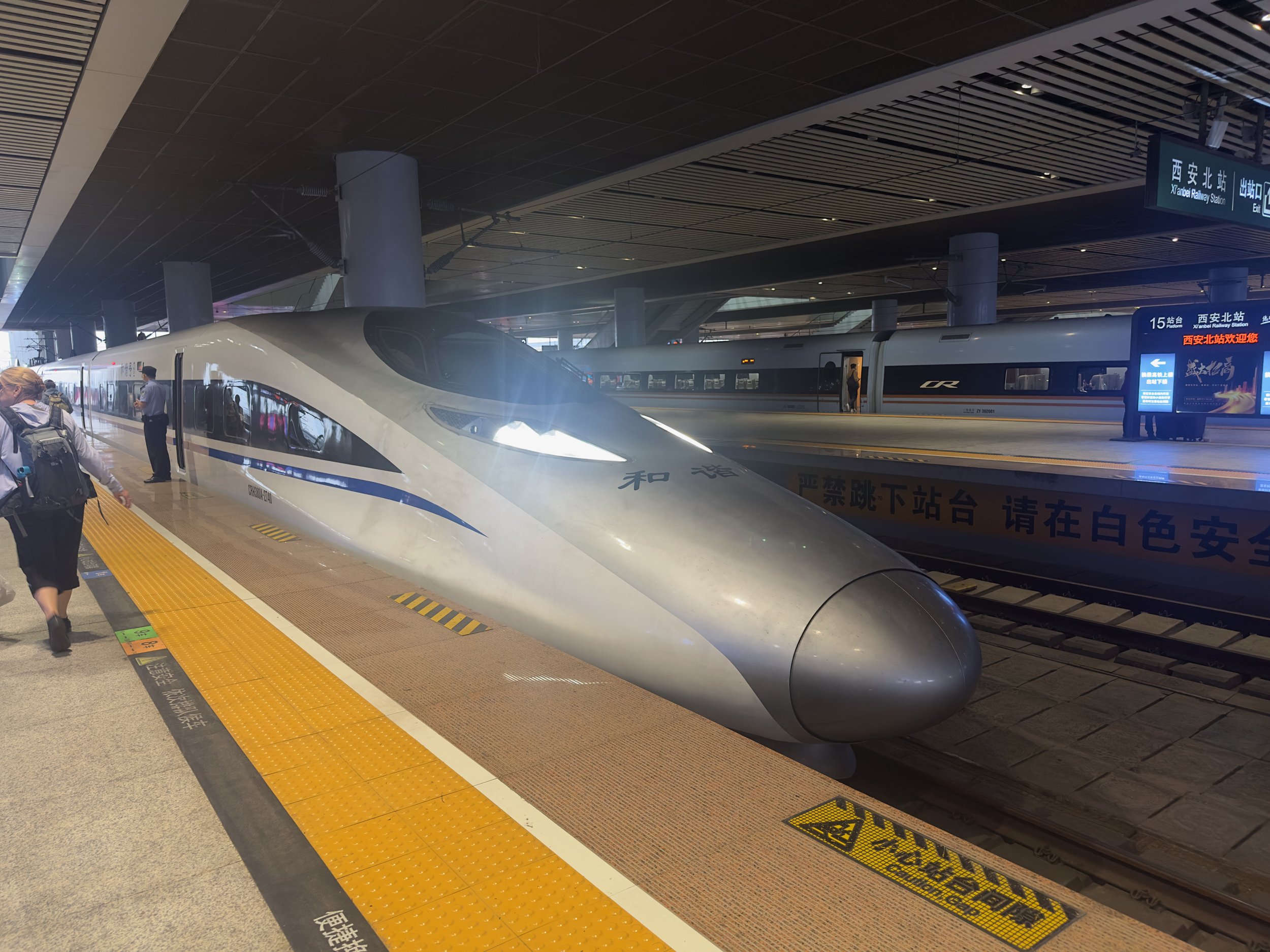
Our train today was the 8.08am CRH380A train starting in Xian Bei and finishing in Nanning East ( about 200km west of Shanghai ) at 8:52pm, and we would get off in Chongqing Xi at 1:41pm. It is common for the high speed trains in China to run long distances on a single service, with people getting on and off as required through the overall trip. BTW the pronunciation for Chongqing is “Chong-ching” ( qi is “chi“)
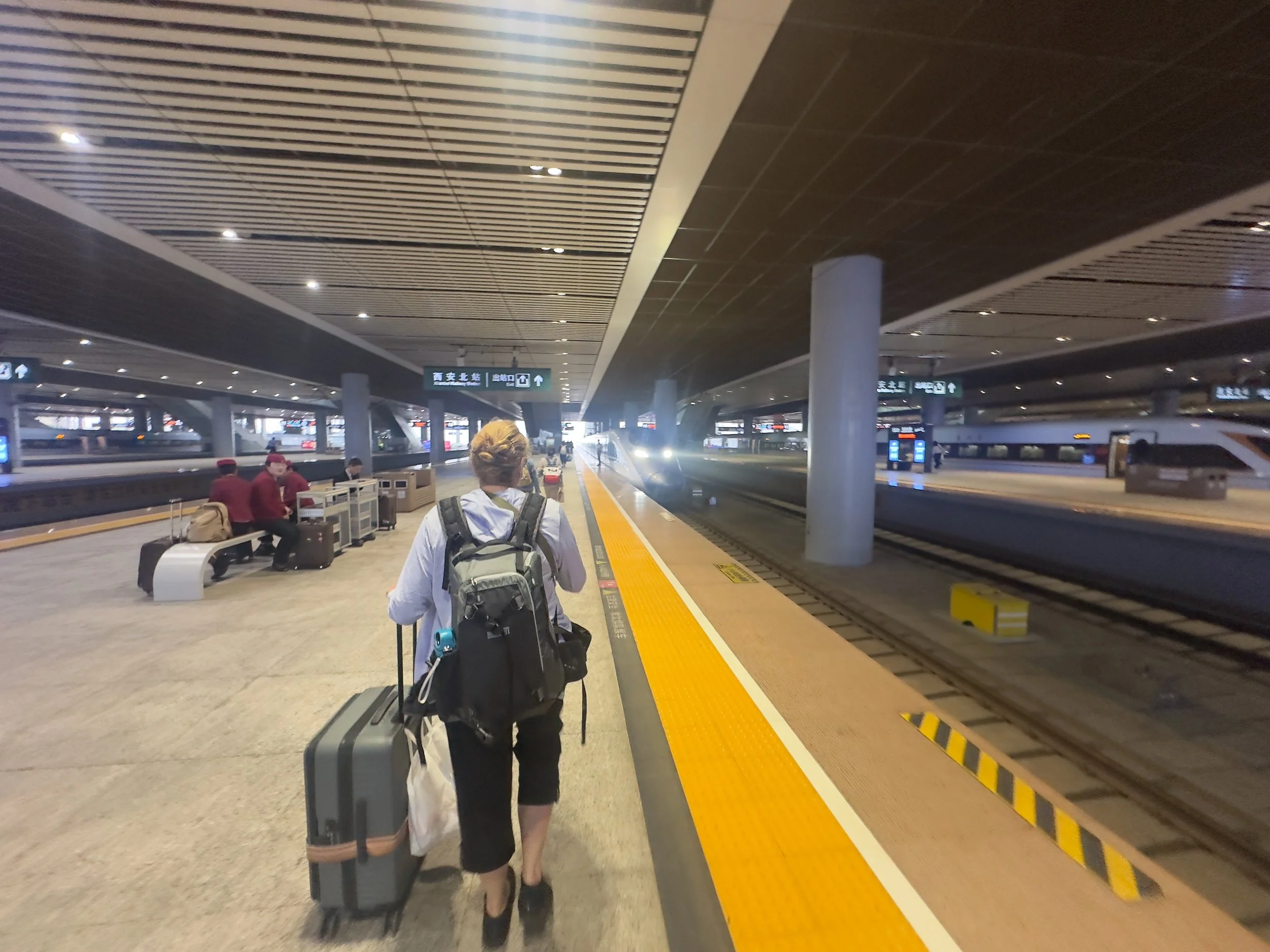
The gate opened at 7:55am ( the info board above each gate has Chinese and English information, and the display lights up green when the gate is open ) but the locals started queuing at the gate as soon as the previous train had departed. There was no real need to queue for most people as the trains all have allocated seating, but there were standing tickets available on this train but not many. We joined the back of the “Manual Entry” queue ( for those that needed their passports scanned ) and quickly passed through the scan with another friendly China Rail guard ( no, genuinely they seemed happy and were always super friendly and helpful ) then down to our platform ( 16B ), onto our train ( Coach 4 seats 3B and C, Second Class ). The carriage was pretty full by the time we got on, and we stored our bags at the end of the carriage with everyone else’s. We had an aisle and middle seat in the 3 seat side of the carriage ).
A brief note about the different classes of carriages/seats; we had purposefully booked a variety of seat types for the trip from 2nd class ( airline seats in a 2 and 3 configuration ), 1st Class ( bigger seats, more space, and a 2 and 2 configuration ) and Business Class ( large seats, fully reclining with food included ). For a comparison of costs we paid USD$139/NZD$255 for 2 x 2nd Class tickets, and for the same trip in 1st Class would have been USD$210/NZD$385 and Business was USD$400/NZD$733. So we had booked Business and 1st class on the shorter journey’s to keep the costs down, and to be honest 2nd class was plenty good enough.
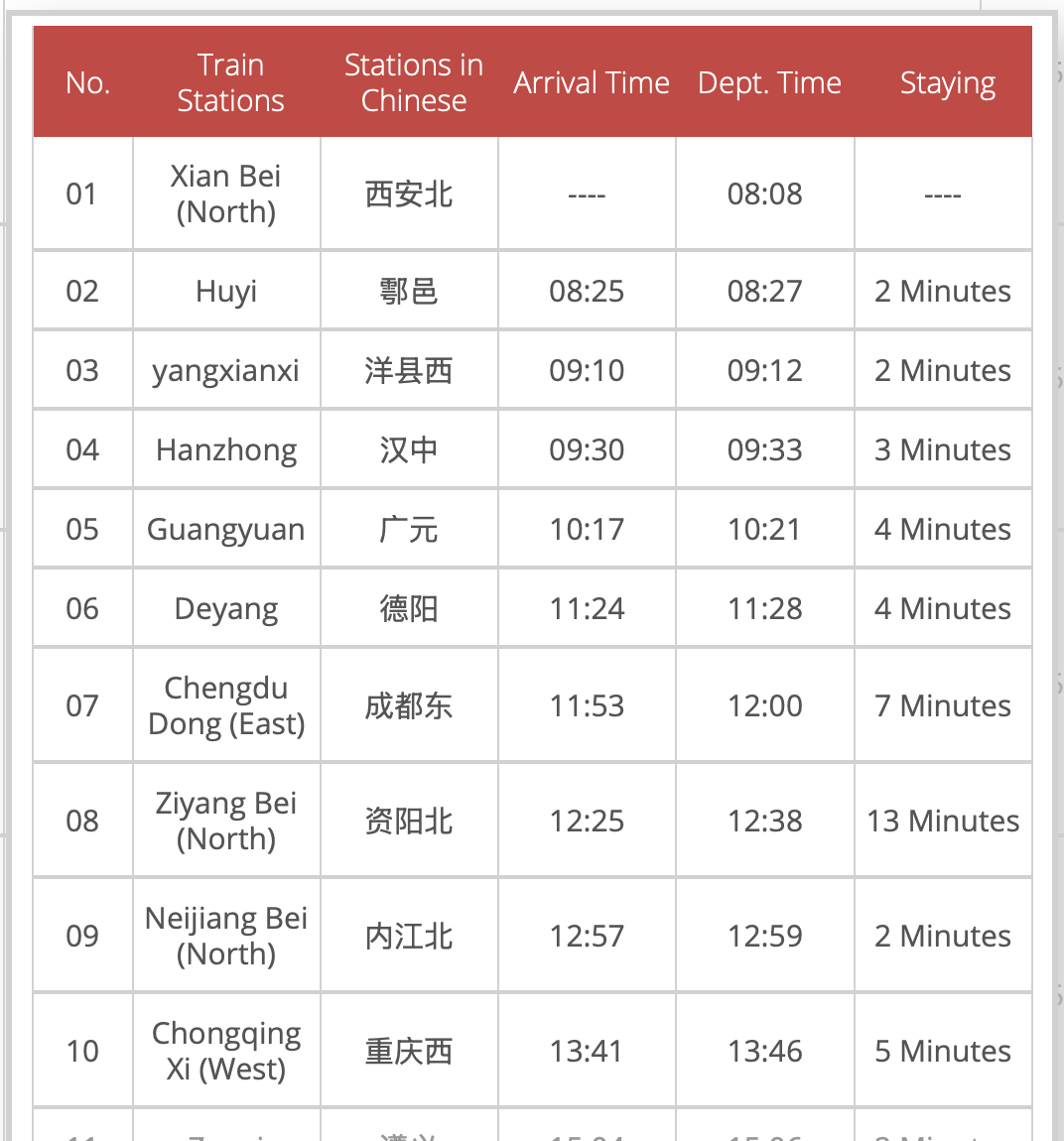
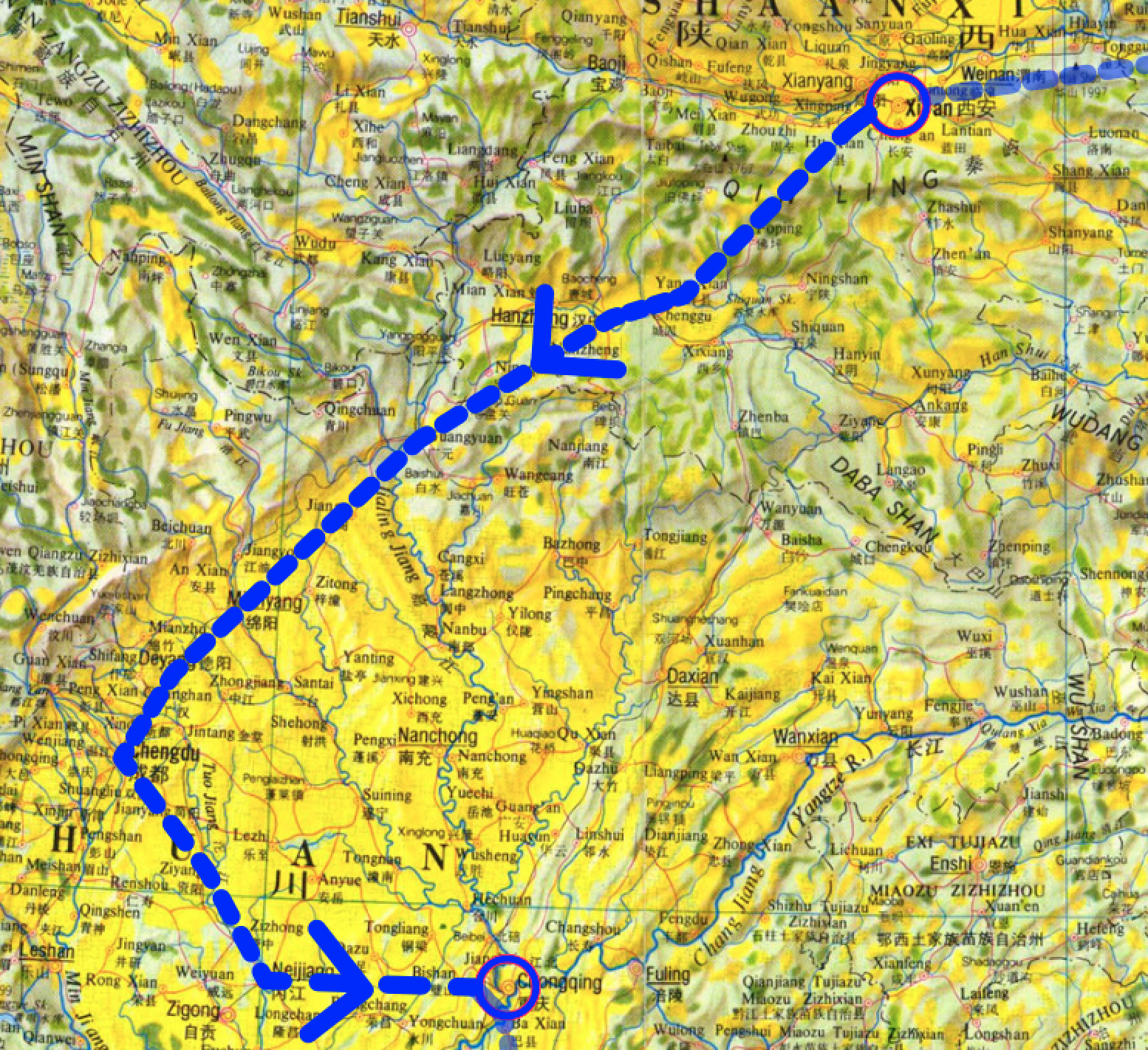
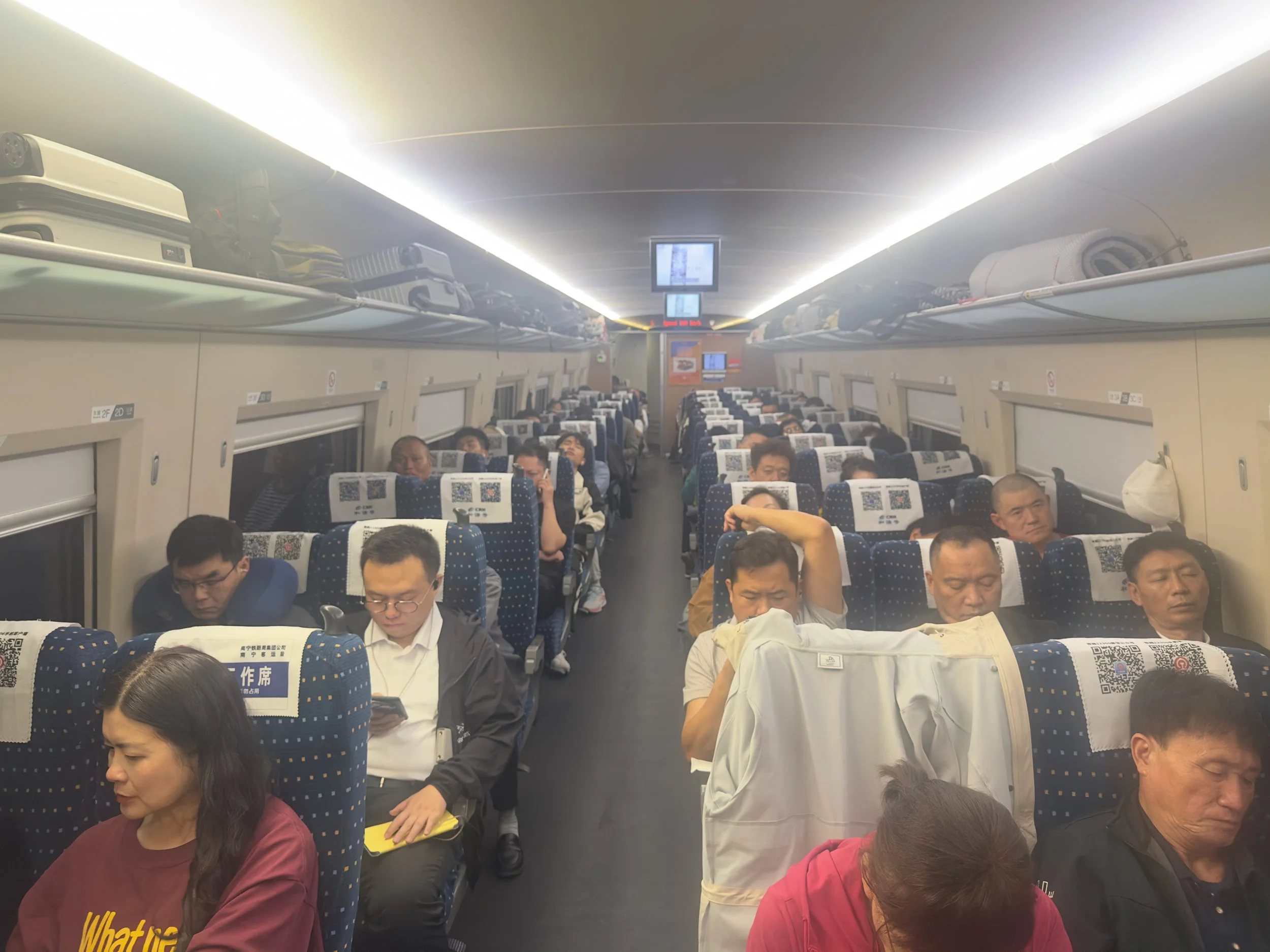
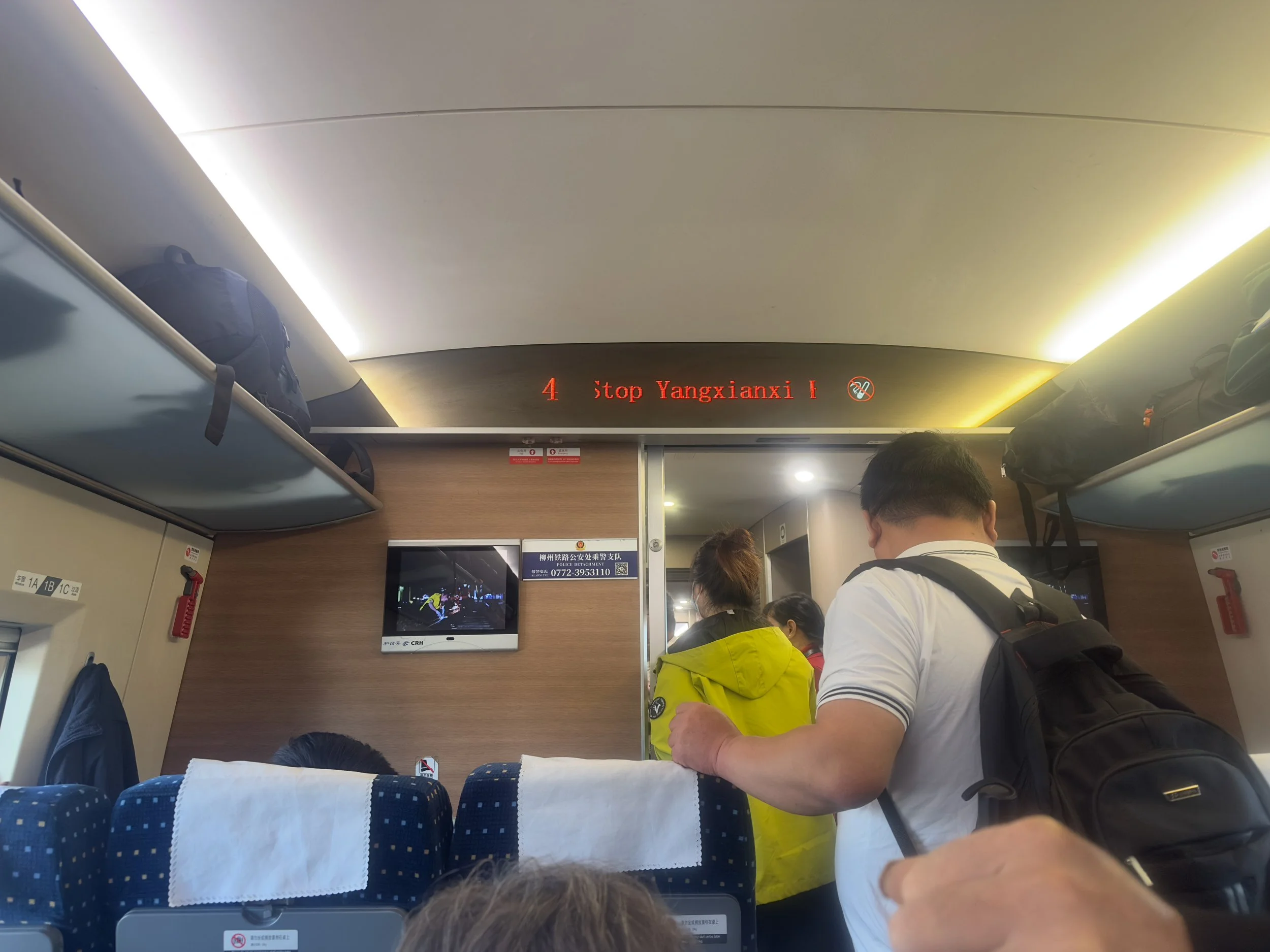
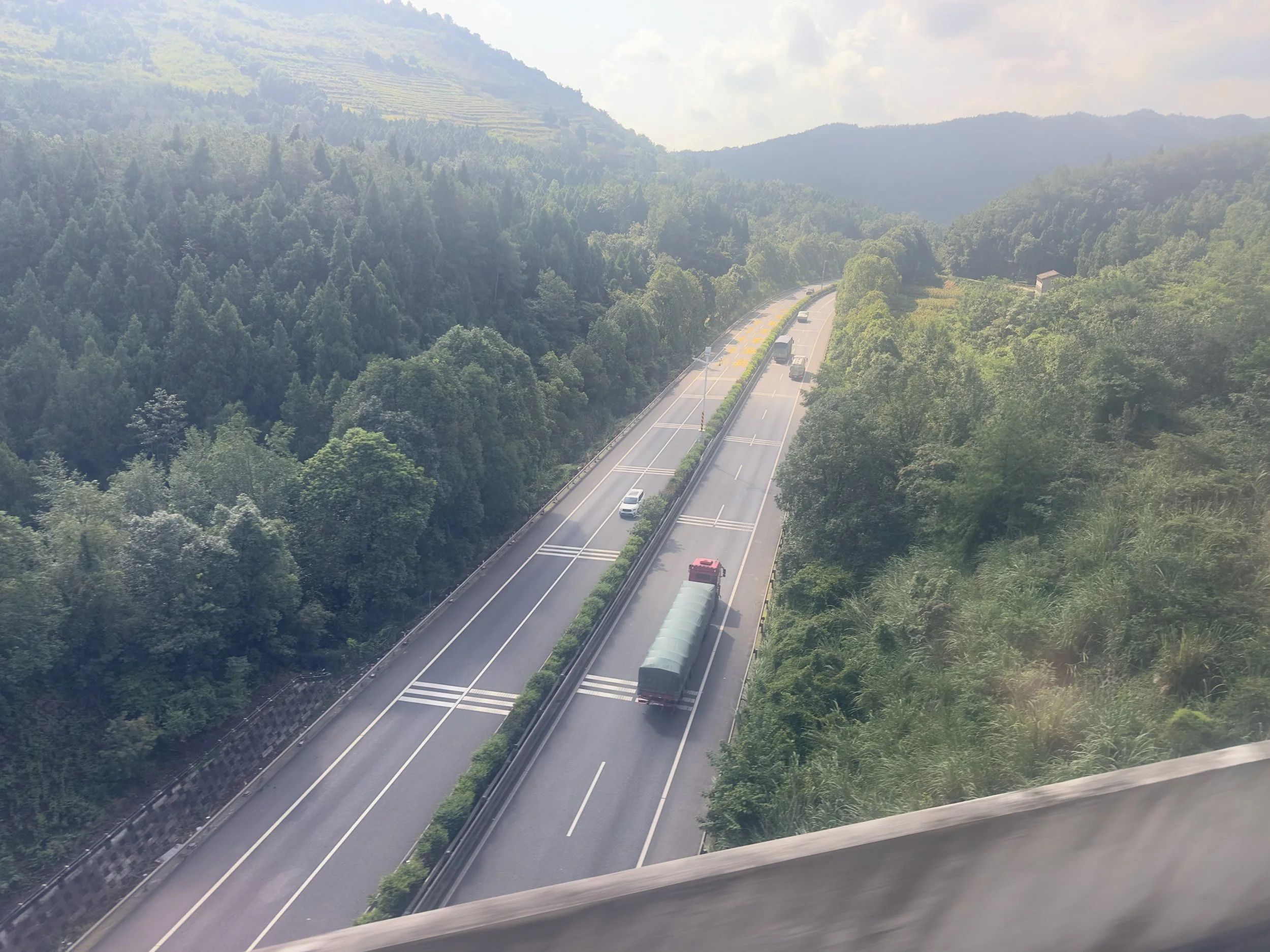
We left on time at 8:08am, slowly headed west to Huyi for a stop ( and some people got off here ), then turned south into the hills. A lot of this trip was spent in tunnels with a brief flash of daylight as we crossed through a valley then back into a tunnel. We carried on south west to Chengdu East ( at a max speed of 240km/h ), then changed lines and headed east toward Chongqing. Once clear of Neijang we hit 300km/ph for most of the way to Chongqing West.
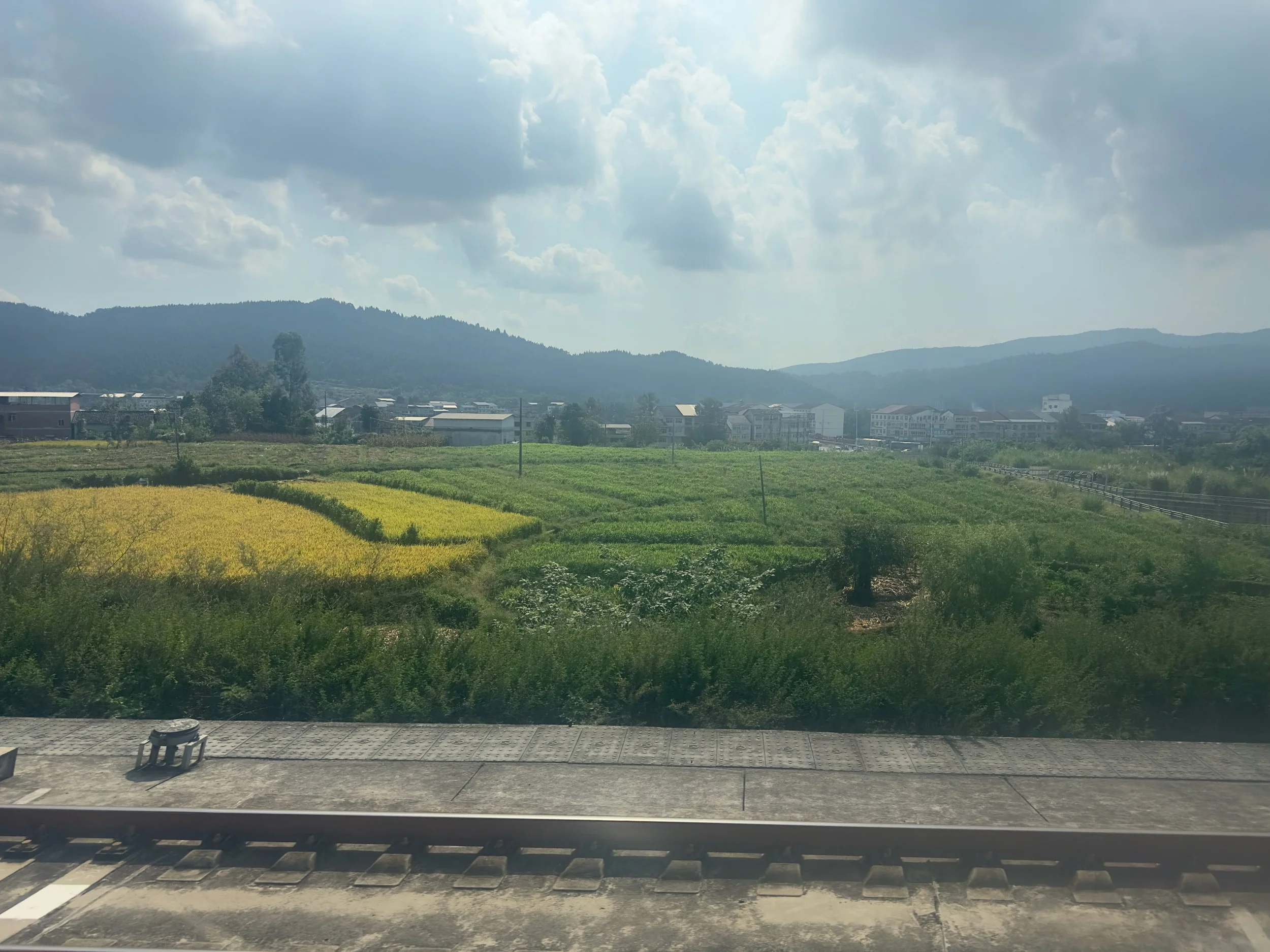
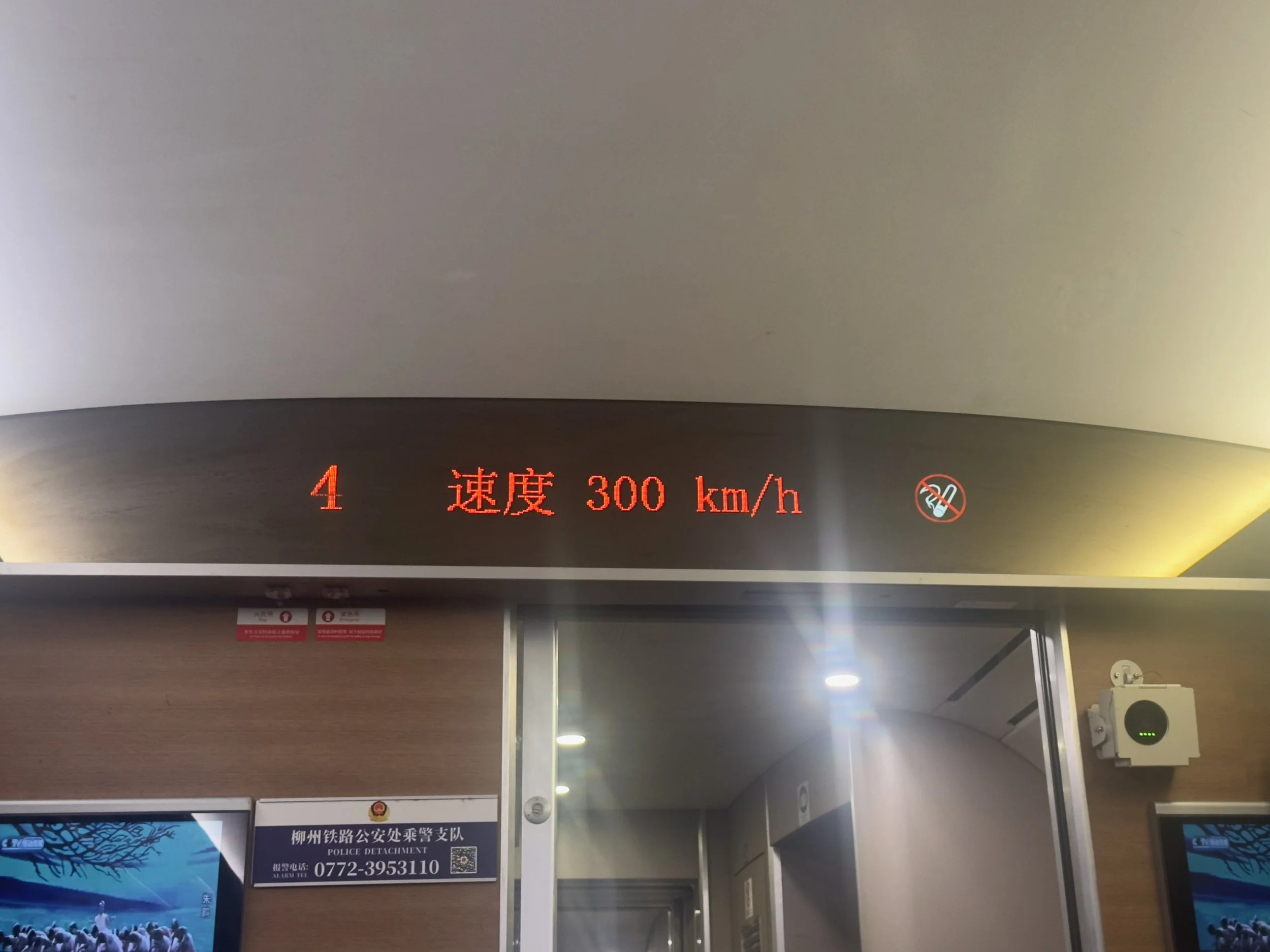
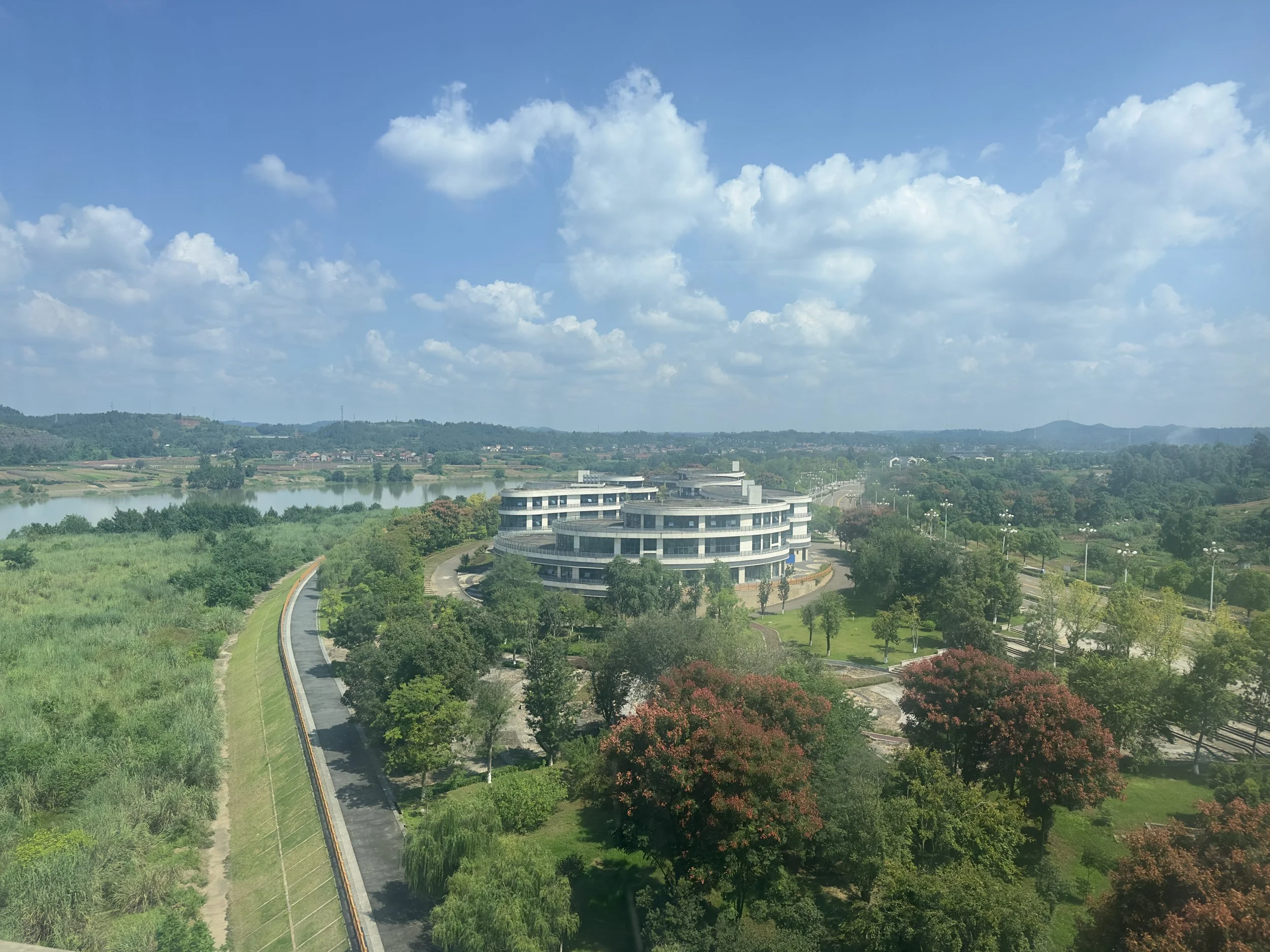
Overall the journey was good, the carriage was full and quite noisy, with lots of people getting on and off at each stop.
Chongqing has 3 large new railway stations on the edges of the city; ChongqingXi ( west ), ChongqingBei ( north ) and the newly opened ChongqingDong ( East ), which at the time of writing is that the largest railway station in the world with 29 tracks running through it. In a few years there will be a new more direct line from Xian to Chongqing that take a more direct route.
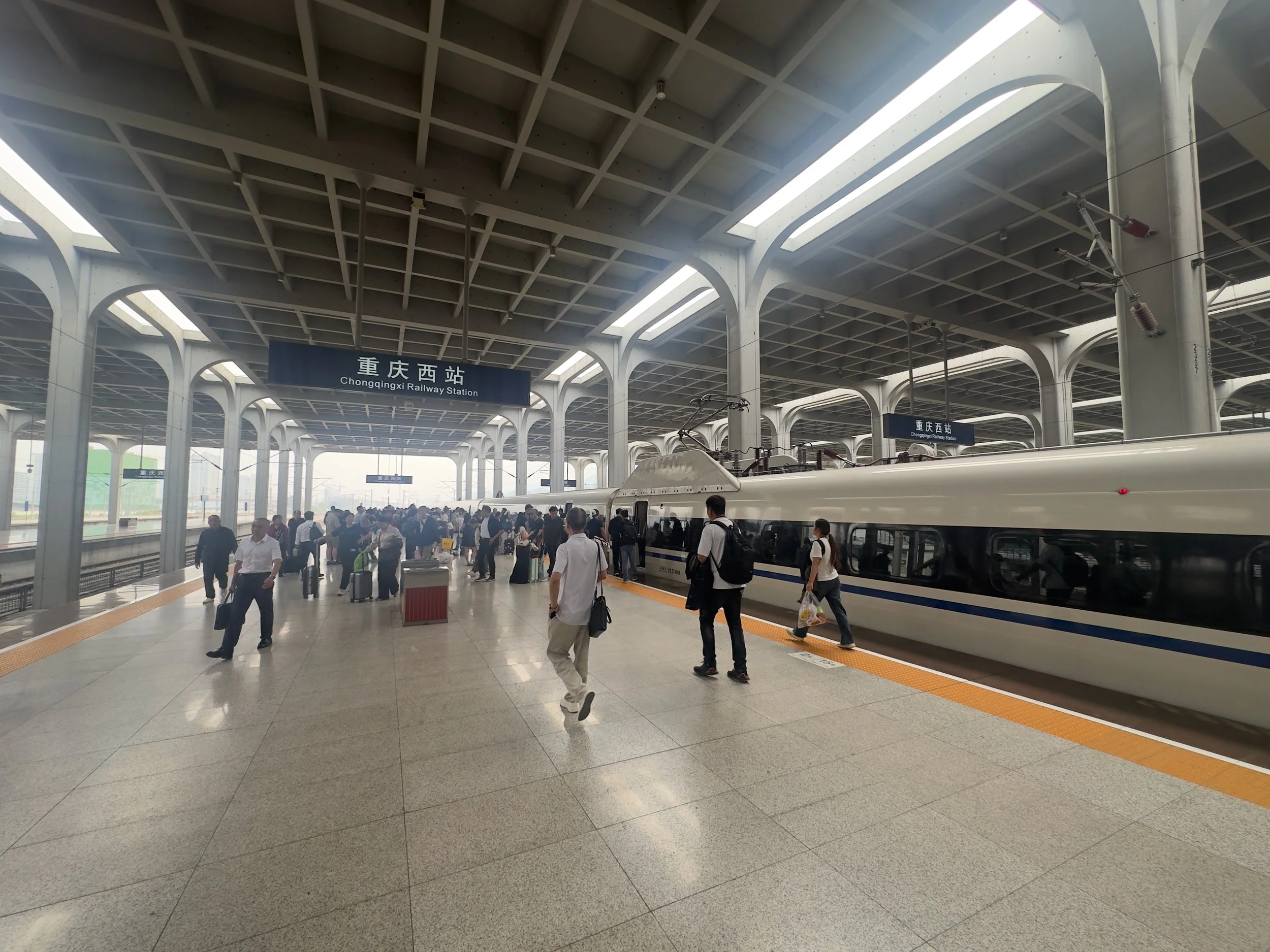
We arrived at Chongqing West / ChongqingXi Station at 1:40pm ( 1 minute early ) , headed down to the arrivals concourse. Another common design of the modern railway stations in China is that the departure concourse is above the tracks, and the arrivals area is below the tracks. Went through the ticket check then down to the metro line ( we had to get new Alipay metro card loaded first on our phone before going through the gate line ). It took a bit of time to figure out the best route to where we were going ( we were using an online Metro app which helps but there are 2 metro lines that run through the station and 1 of those is a loop line, so we had 3 choices of directions to go, and we needed to change lines to get to our final stop, so there were a lot of choices to make ). Eventually we sorted our route and headed down to Line 5 northeast, then Line 1 at Shiqiaopu, then line 2 at Daping.
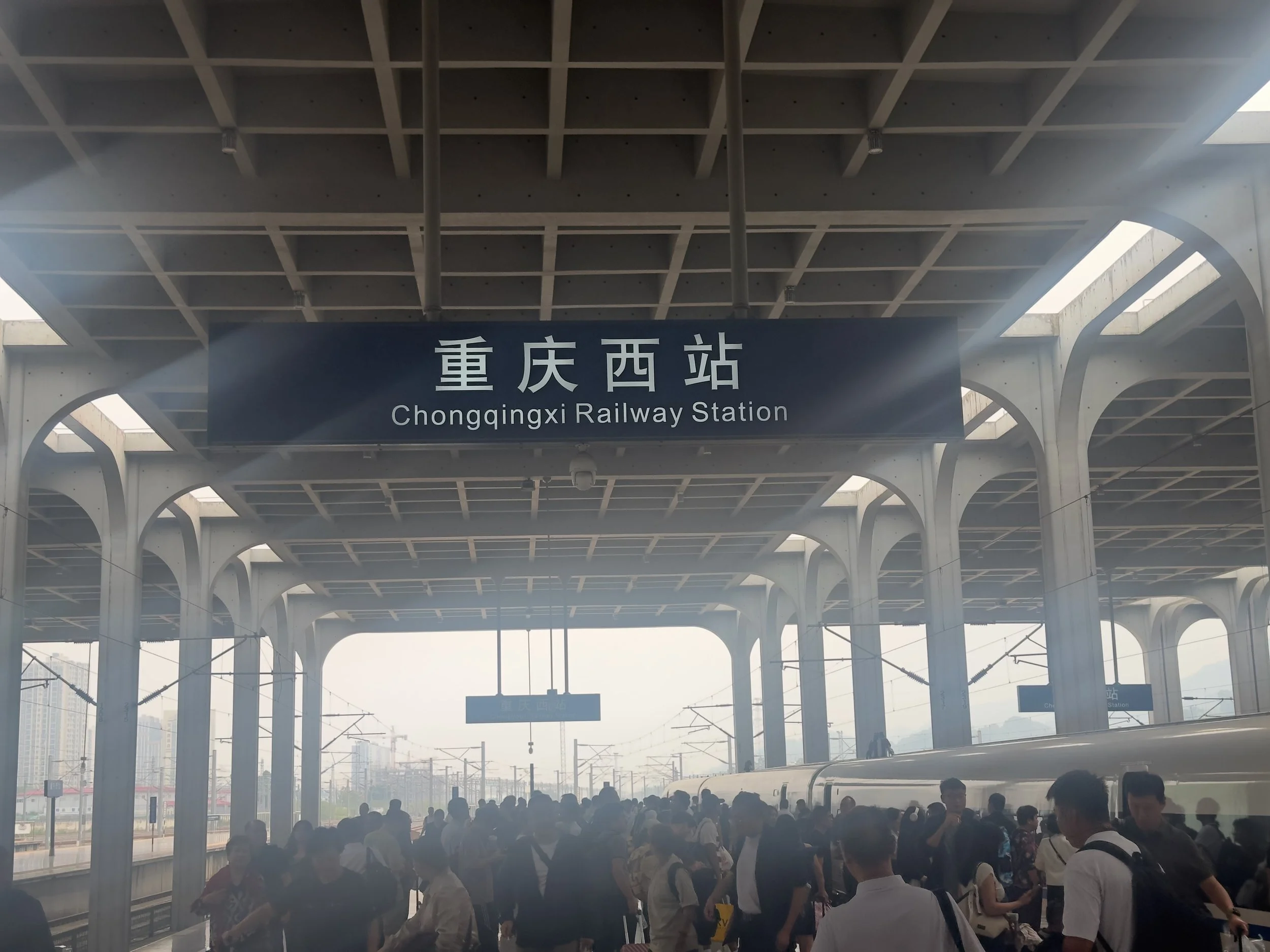
A brief bit of info about Chongqing and it’s Metro. Chongqing has an urban population of 32 million, and until 2005 had no metro system. This is mainly due to the very hilly terrain where the city is built ( more of that in a later post ). The metro system now has 23 lines and is one of the largest ( by track miles ) of any in the world. And as part of the metro construction they built many of the world’s largest bridges to span the 2 rivers that flow through the city; these include the highest and longest metro bridges in the world. And to add to that it has the deepest and highest above the ground metro stations in the world as well.
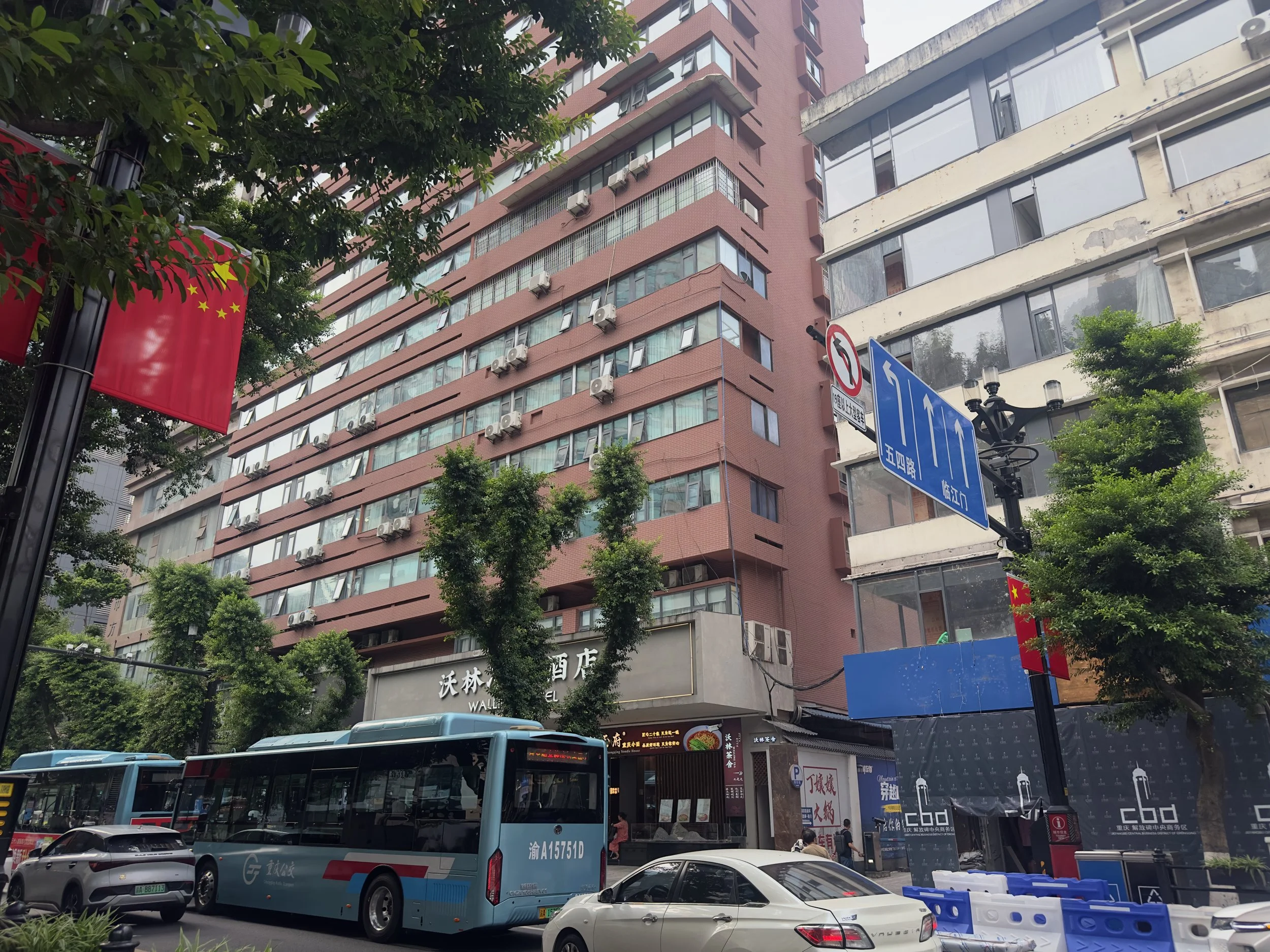
So we got onto Line 2 at Daping, heading north and very quickly went from being underground to 10 storeys above ground as the line comes out the side of the cliff next to the Jiang River, and then after following the river for a few kilometres we went back into the cliff and arrived at Linjianmen Station, up to the surface and looked for our hotel. We don’t normally get lost in new places but this metro exits were in different places than I expected so we had a couple of false starts at getting the right exit/street, but eventually found the direction we needed to head. We walked to our hotel ( Walling Hotel, on Linjiang Road, NZD$208 for 2 nights including breakfast ) and arrived at 3pm ( only a 5min walk from the metro ).
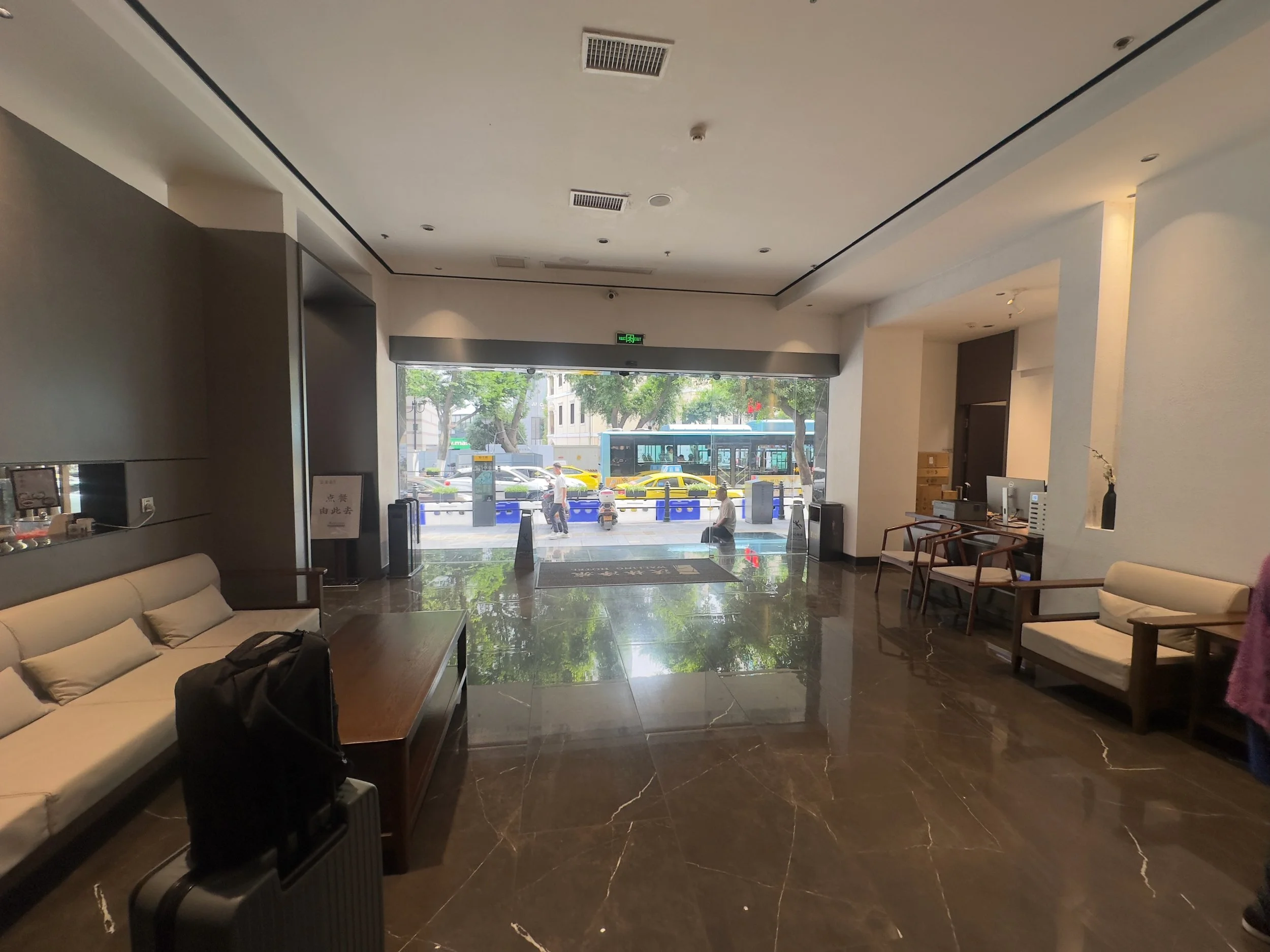
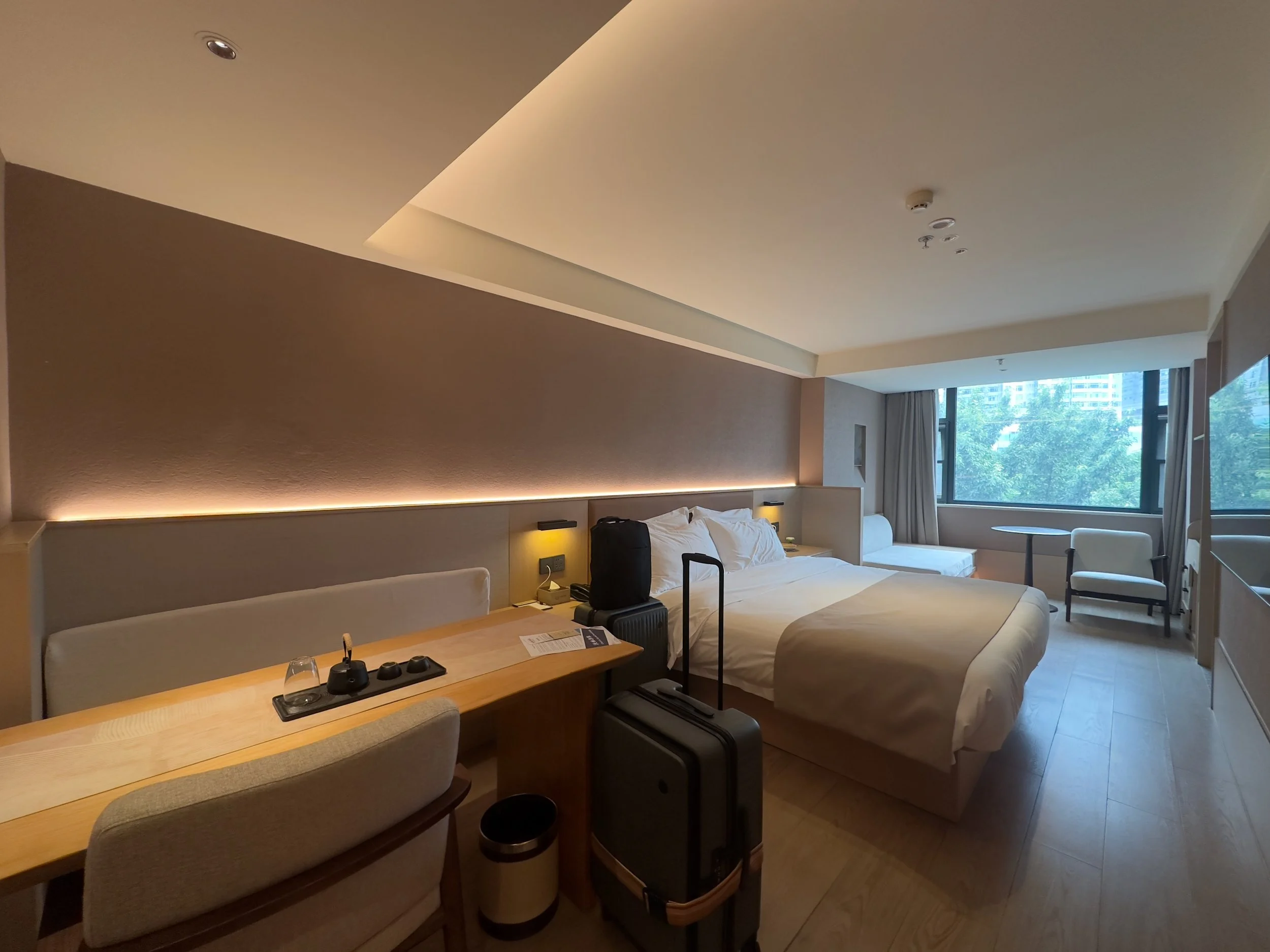
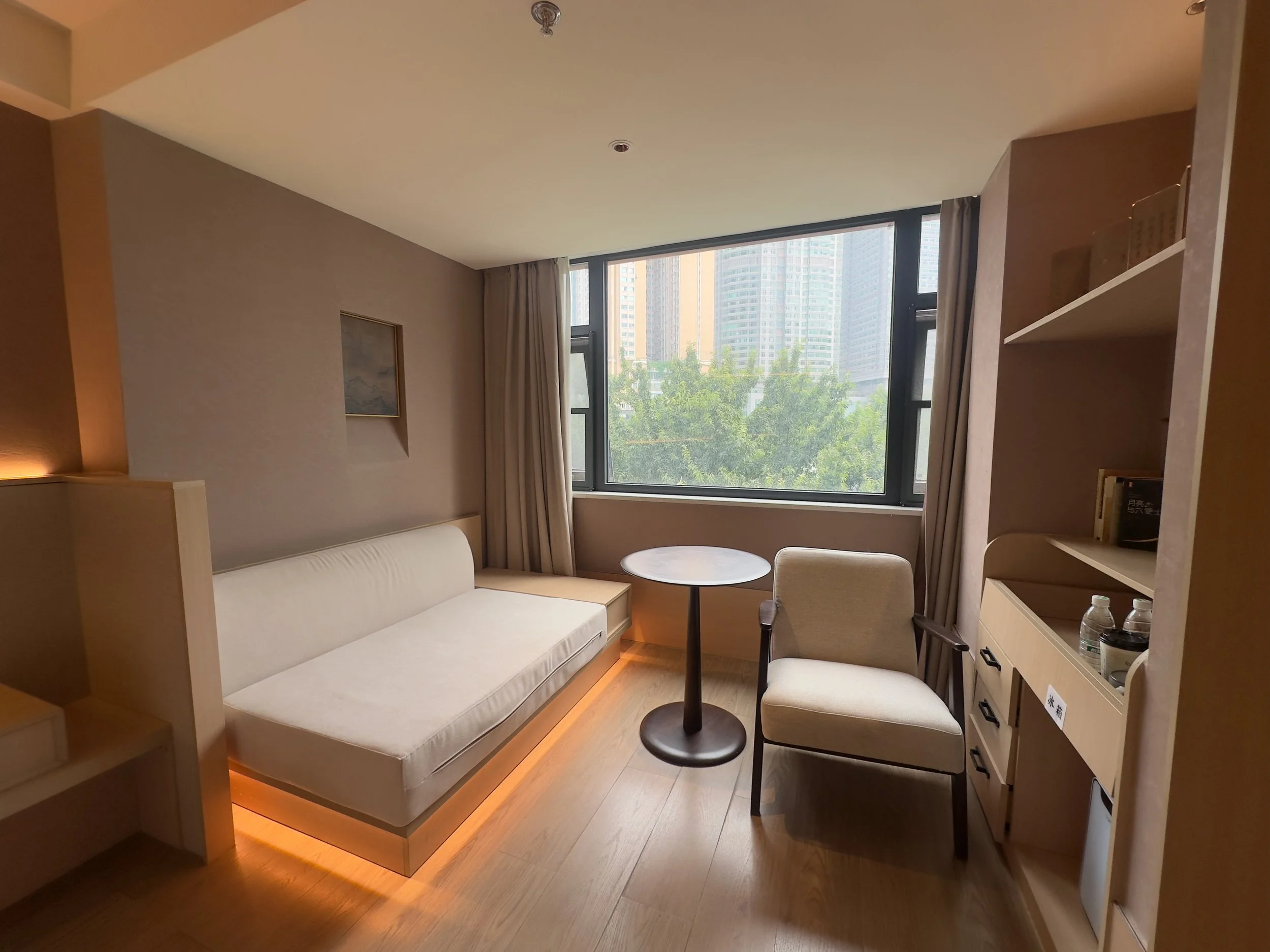
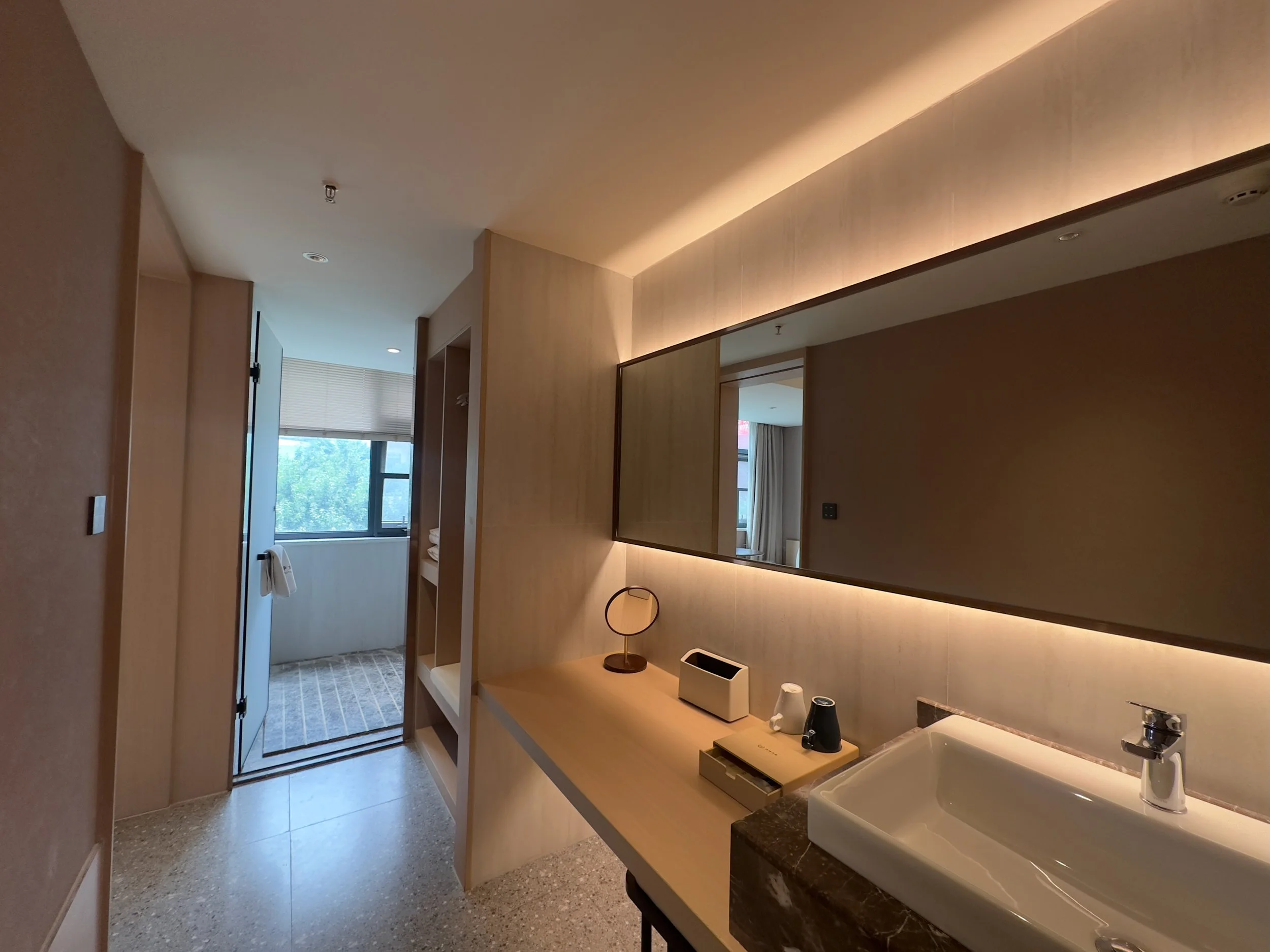
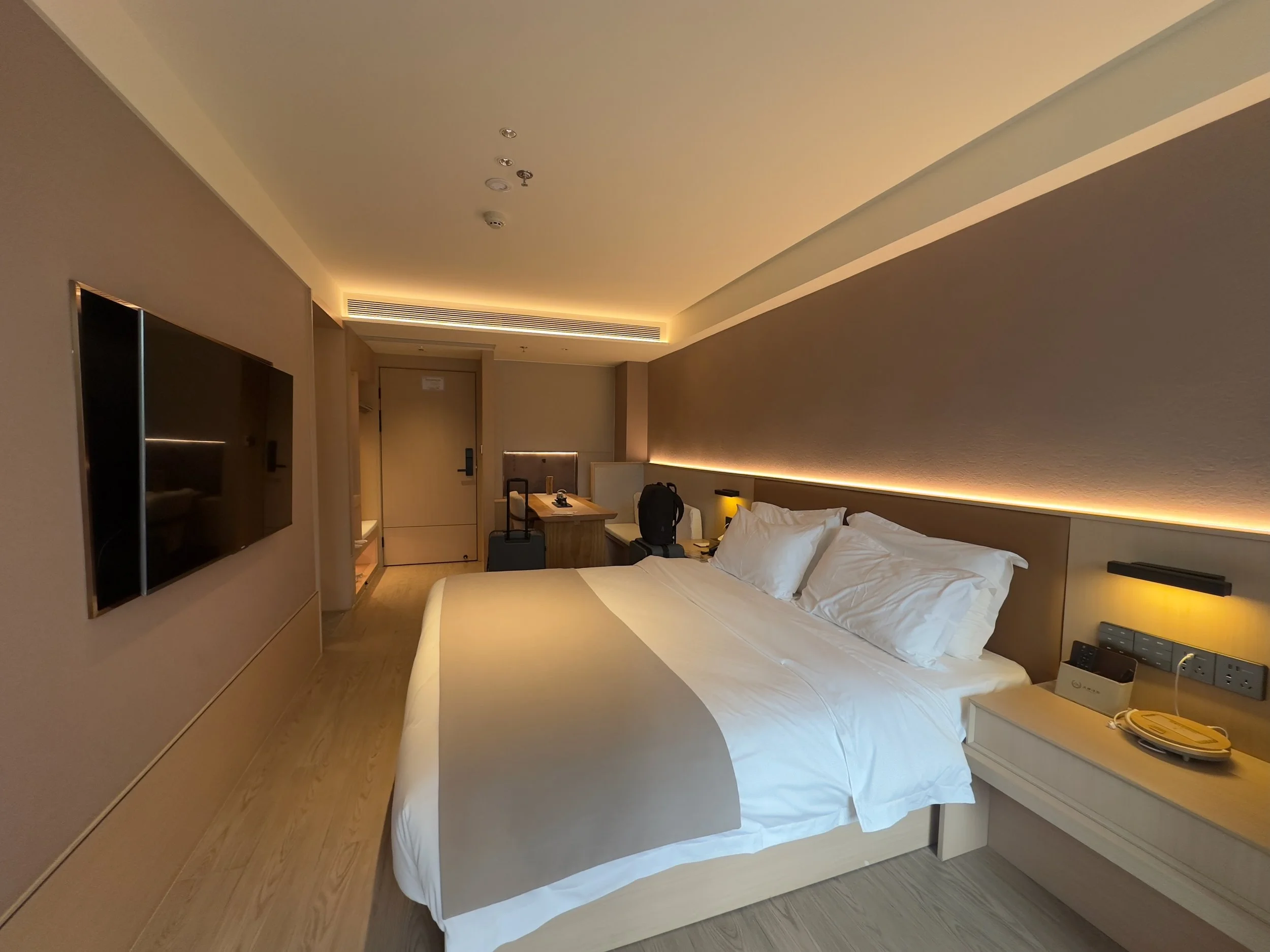
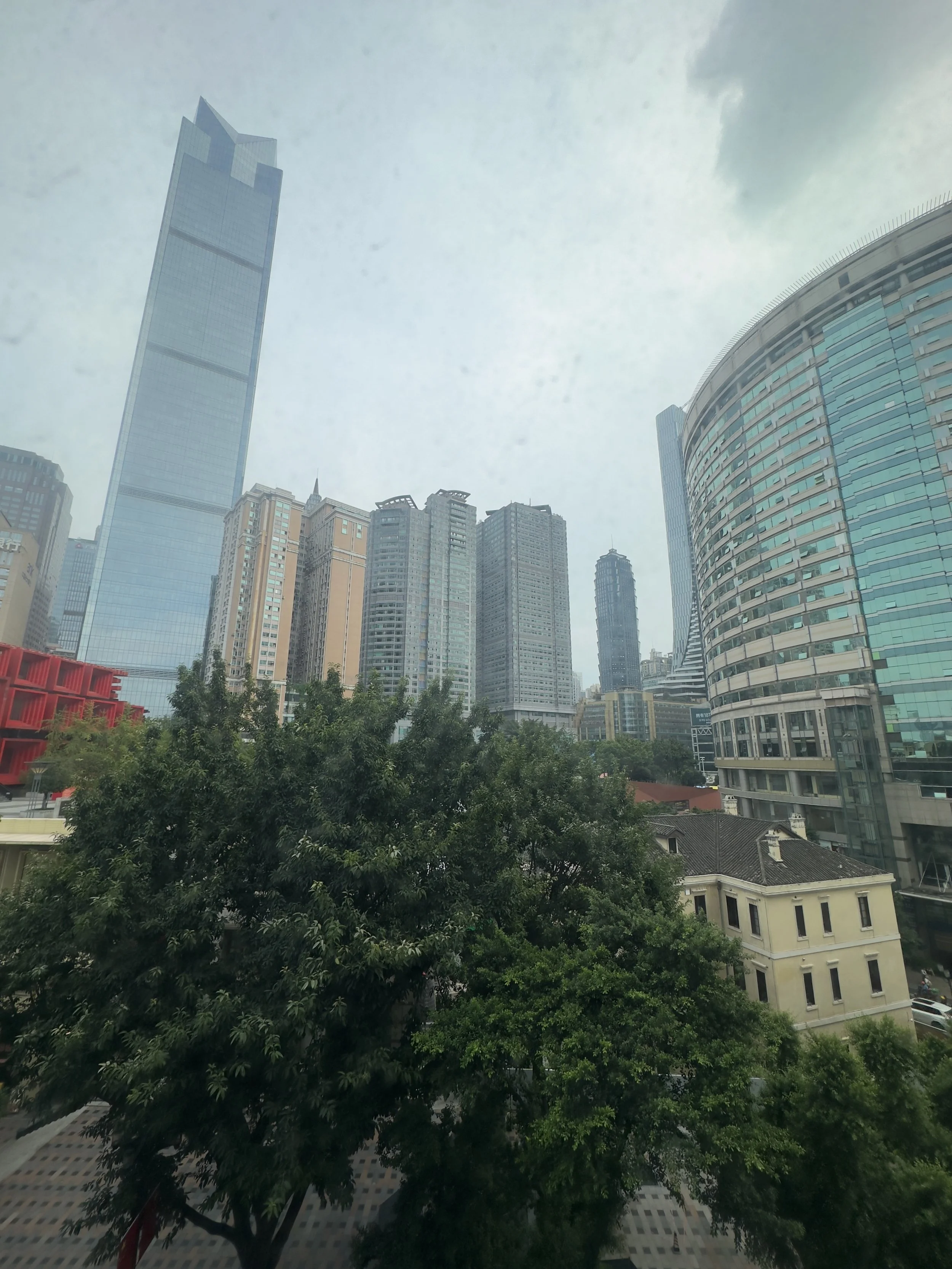
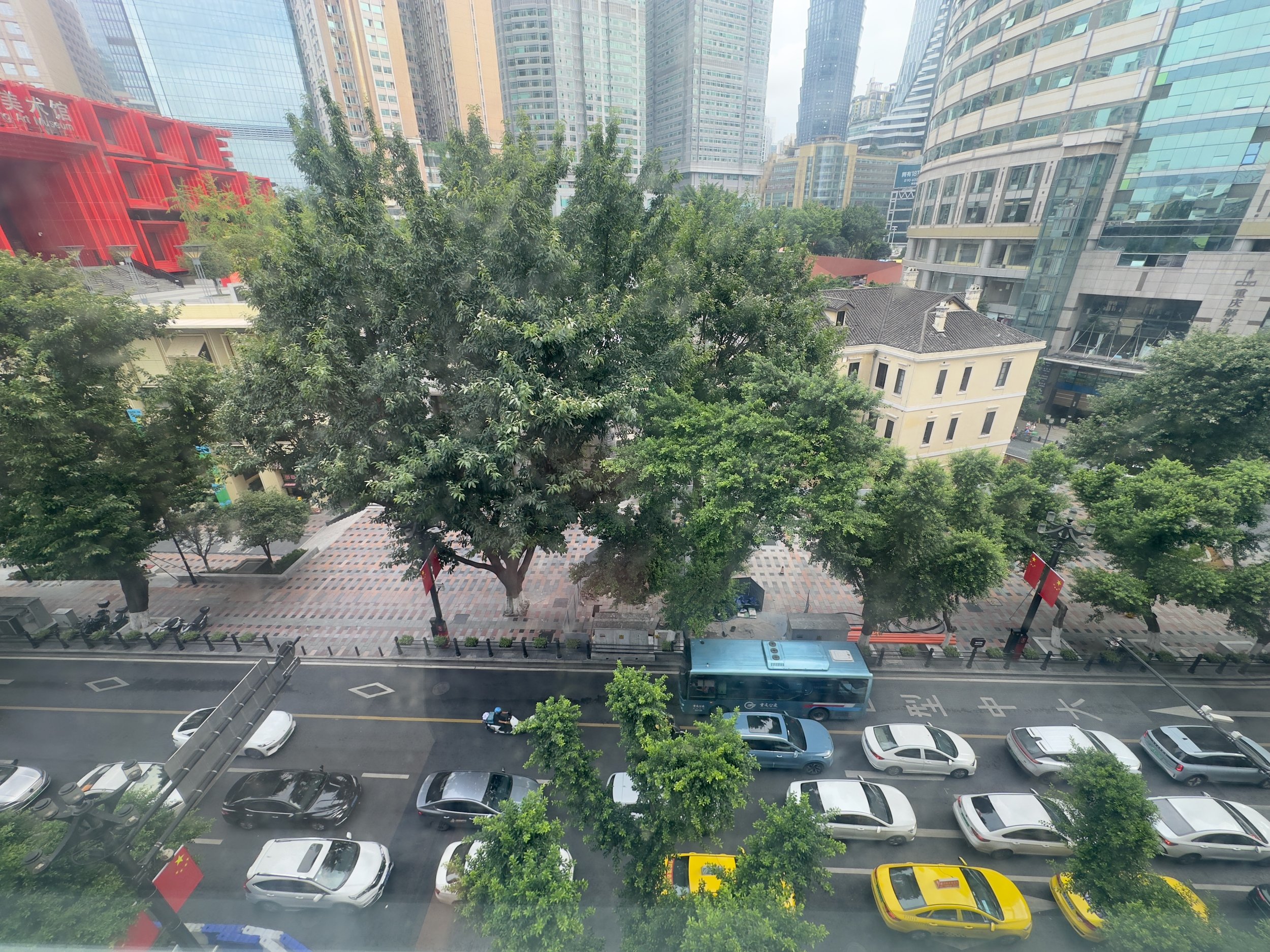
We checked in to the hotel, the receptionist spoke a little bit of English but for anything too complex she used a handheld translation device that she spoke into and it then spoke to us in English. We got upgraded to bigger room for free, although we got a street view not a river view as we had booked ( some of the floors in the hotel were being refurbished so I suspect that is why had our rooms changed ). Headed up to our room ( room 604 ), dropped our gear. We spent some time trying to figure out the complicated light switches, which were set up as scenes ( eg bedtime ) and each switch controlled multiple lights, and the curtains, but the switches only had Chinese on them. The room was pretty big ( 45m2 ) and had a 2 sitting areas, a bed, and a large bathroom that ran the whole length of the room.
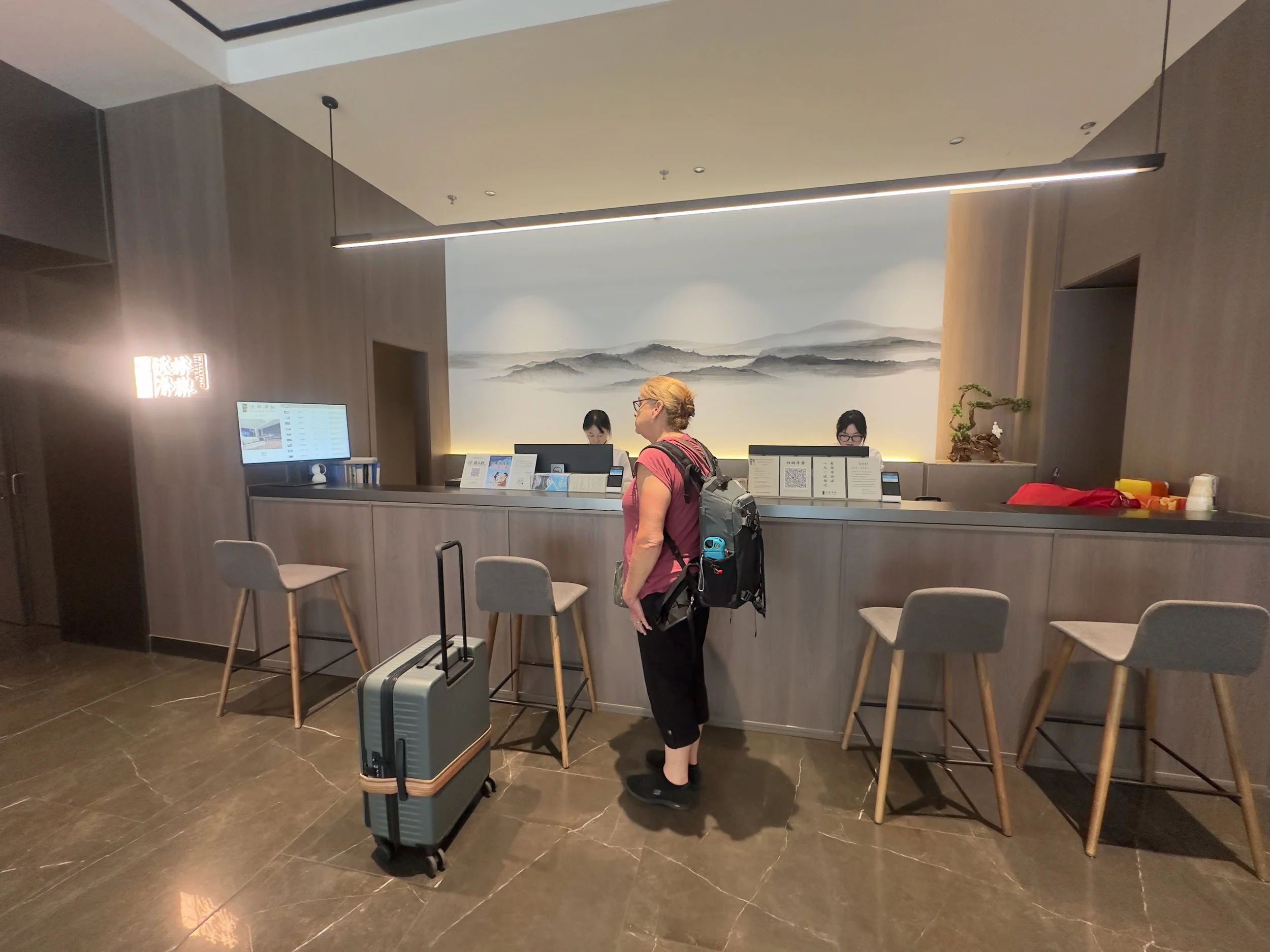
A quick aside about checking into hotels in China based on what we saw. Every hotel needed our passports to check you in, and every time the receptionists either scanned the main page of the passport into their computer or used their phone to take a photo of the page using an app, that presumably was connected to the ‘government system’. Sometimes they would ask which page had the stamp we received at the airport in Shanghai, presumably to check that we were within our 30 day visa limit. The reception never kept our passports and we always got them straight back again, and we were never questioned about where we had been or where we were going.
Almost everything we did in China could be tracked through our passports; from the hotels we were staying in, to the trains we took, to the subways we caught, Didi’s we used etc. Every app / system we used was linked to our passports. Far from being creepy it was reassuring to know that as a foreigner if something ever went wrong, or we got kidnapped (!), at least someone would know our last location.
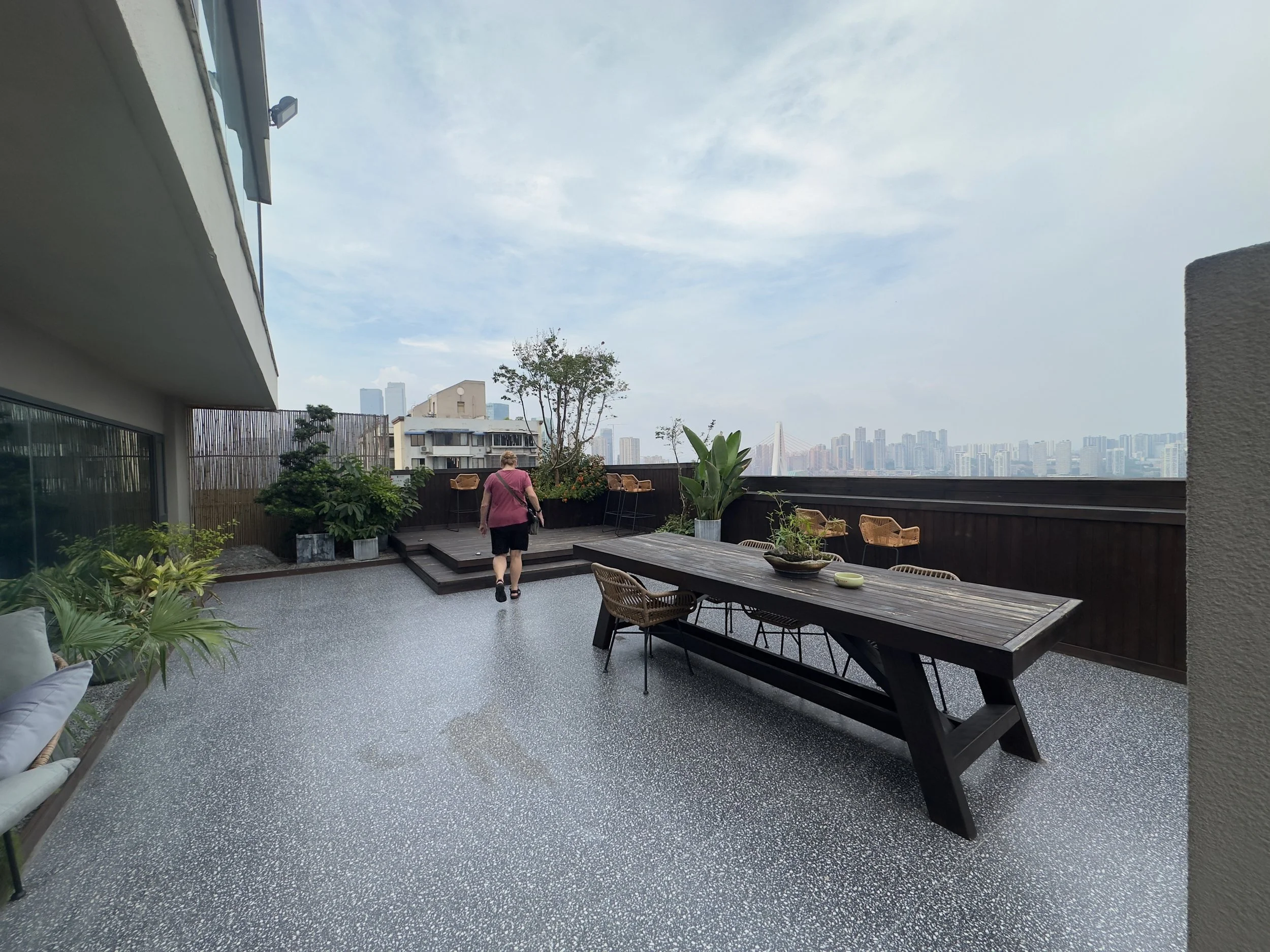
We popped upstairs in the hotel to a outdoor deck that had a partial view of the river ( the upper floors of the hotel ( 14 / 15 / 16 ) were being refurbished ) and then headed out.
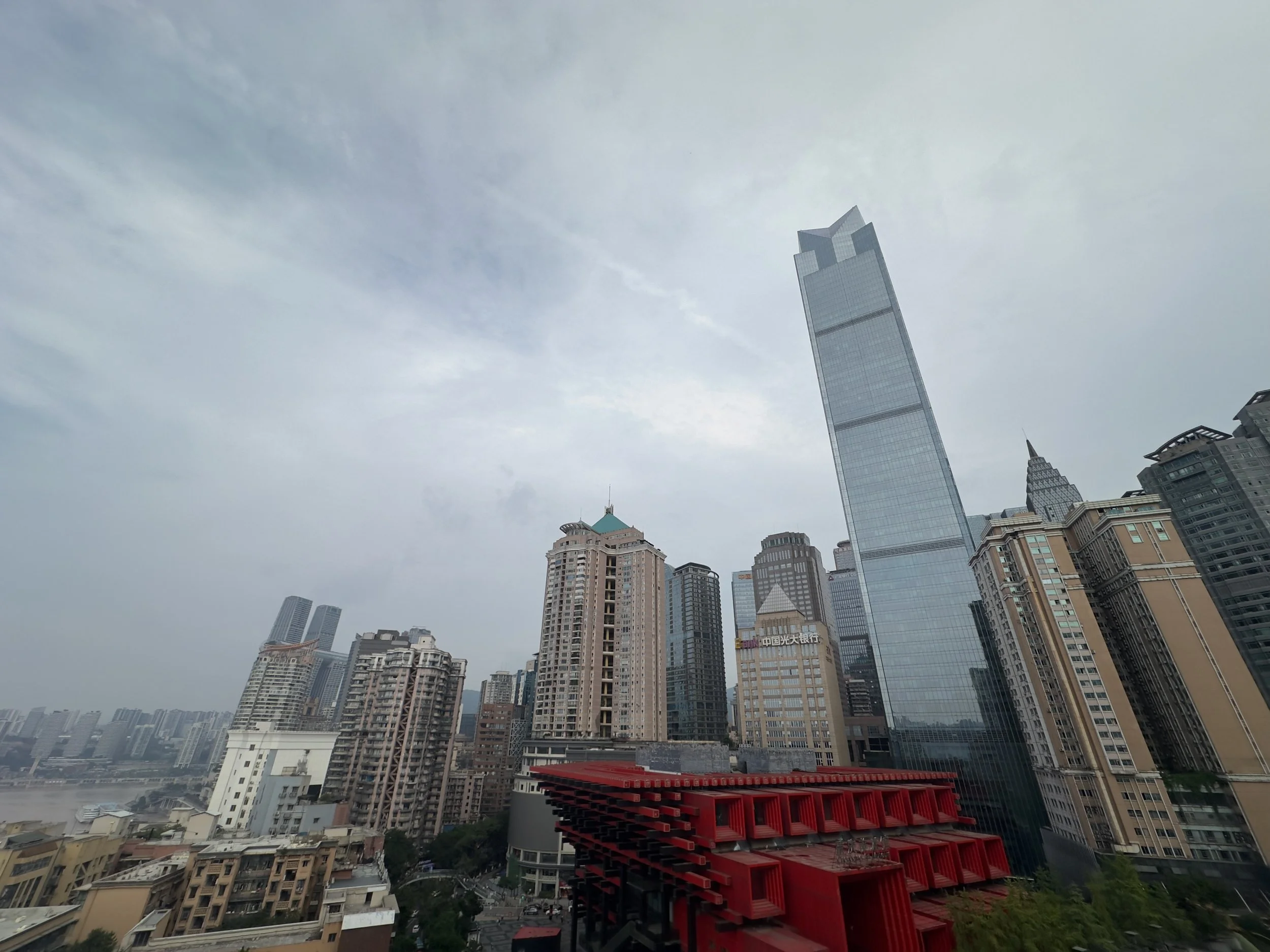
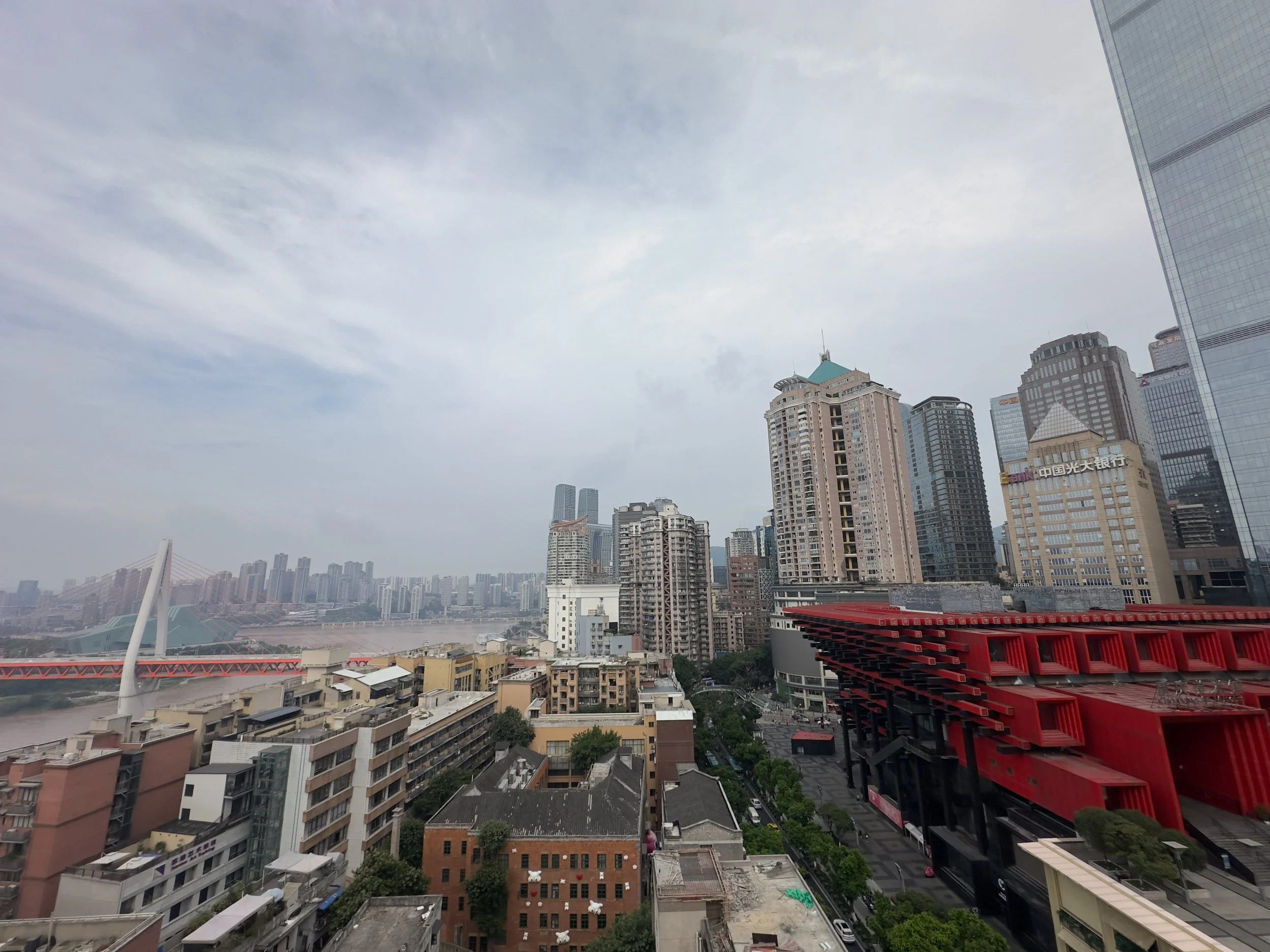
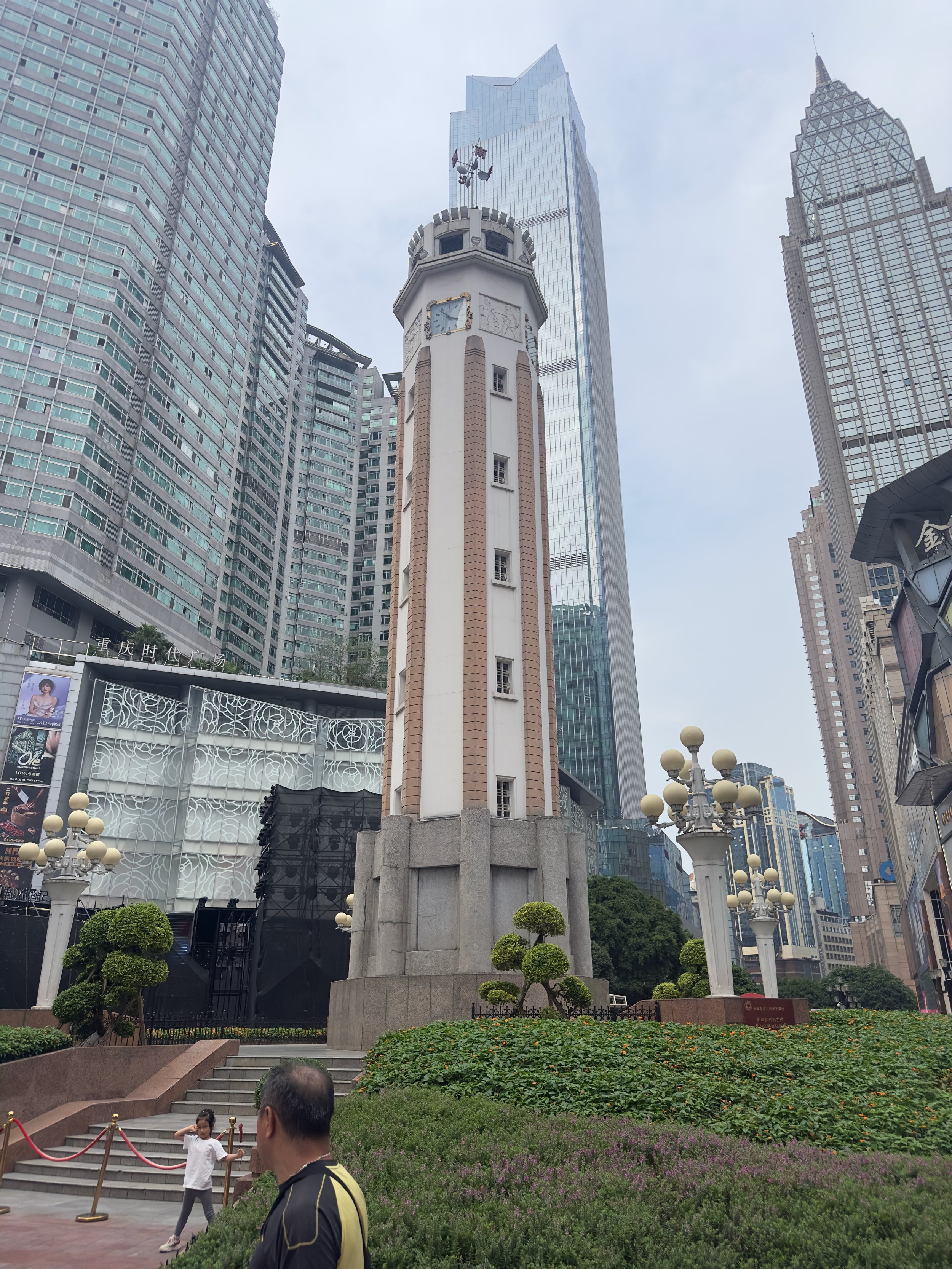
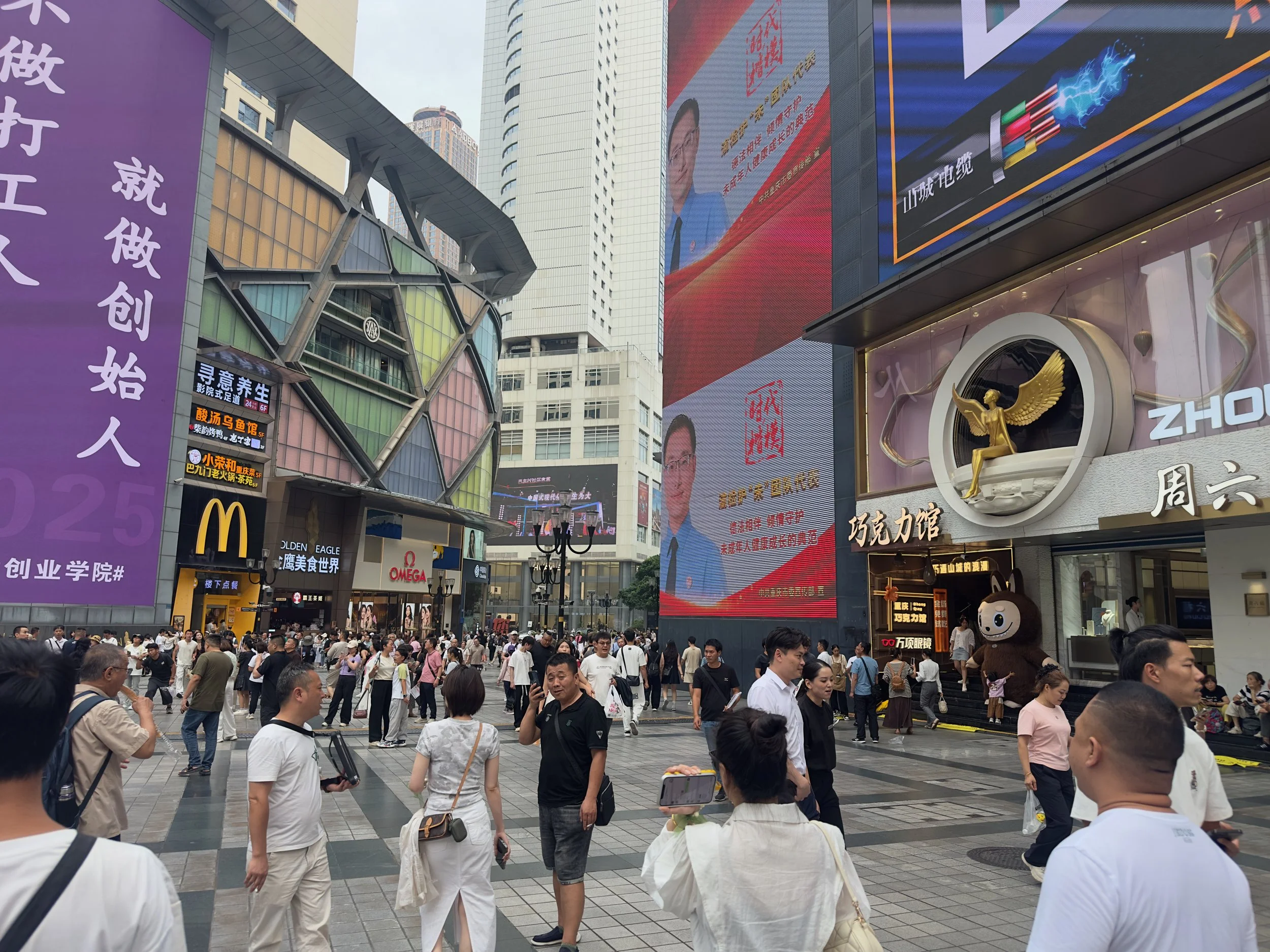
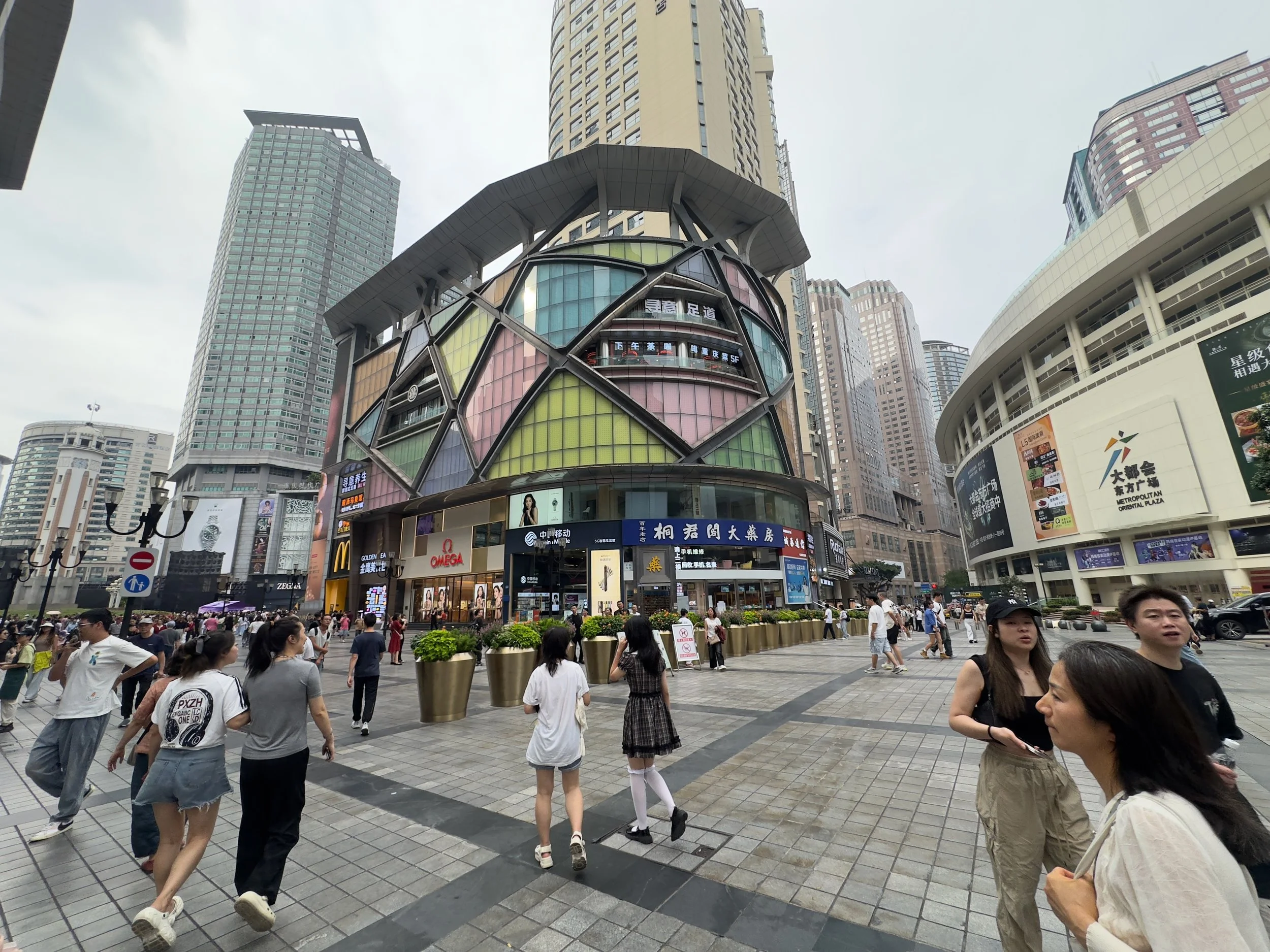
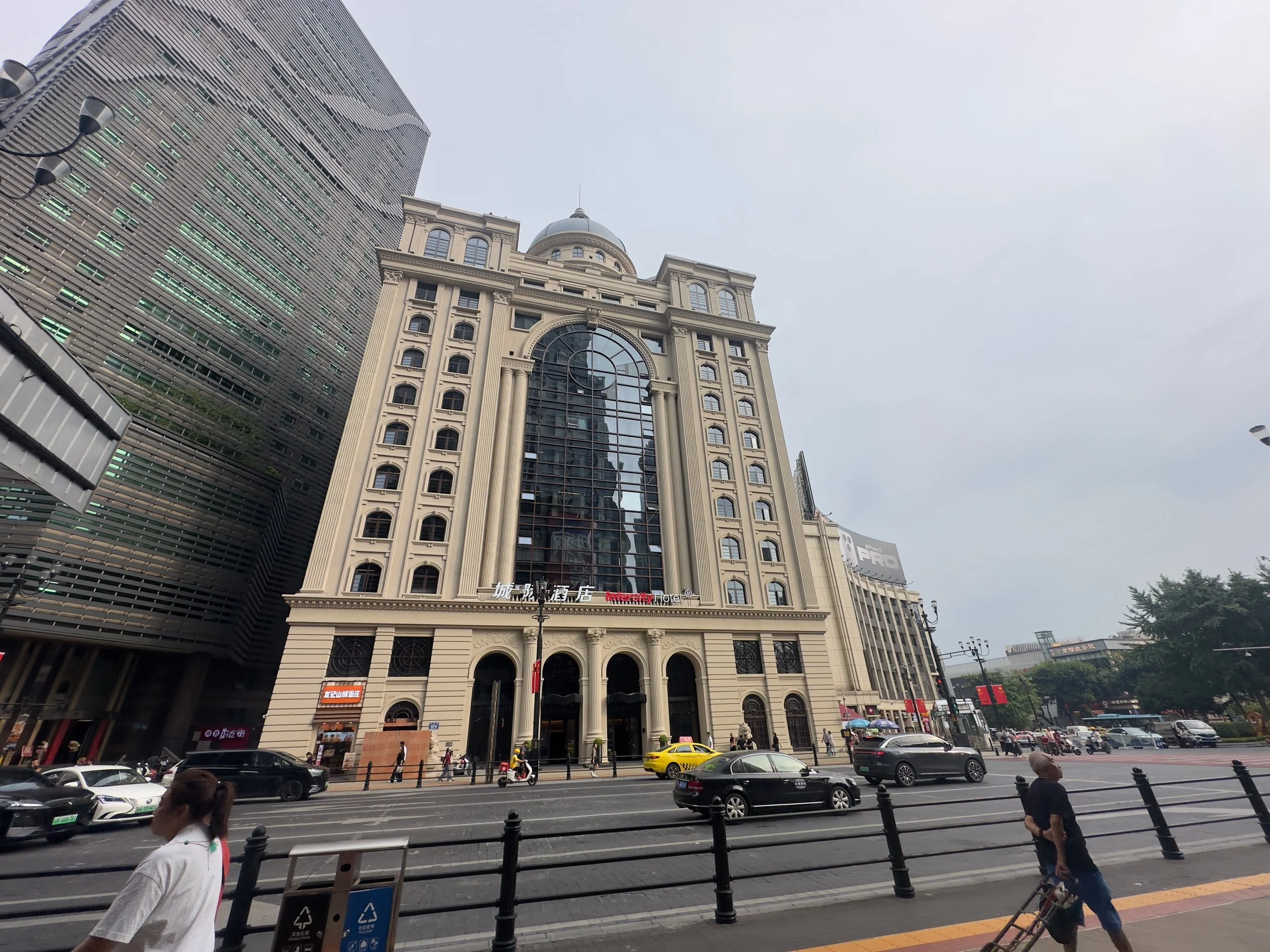
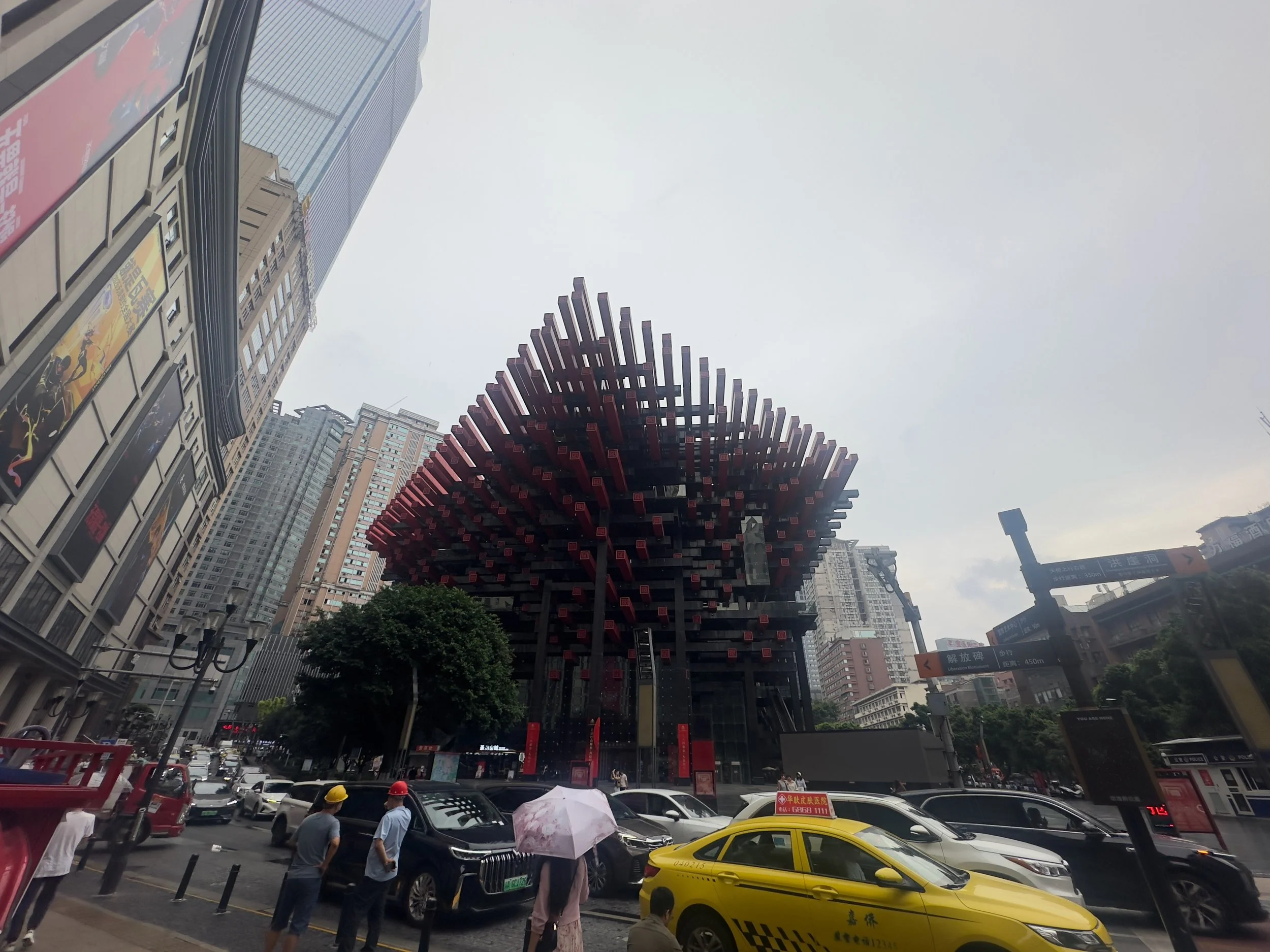
Left at 3:45pm and waked to Jiefangbei pedestrian street. Jiefangbei is the name of the district we were staying in, and the monument at its centre, and it seemed to be the main business district ( or one of them ), and also a tourist area. We had noticed a few European faces in the hotel, and it turns out that they were probably Russians given that most white faces we saw in our 4 weeks in China were Russians. We decided that this was probably because China was one of the few countries that they could visit at the moment with the travel retrictions placed on Russians because of the war in Ukraine.
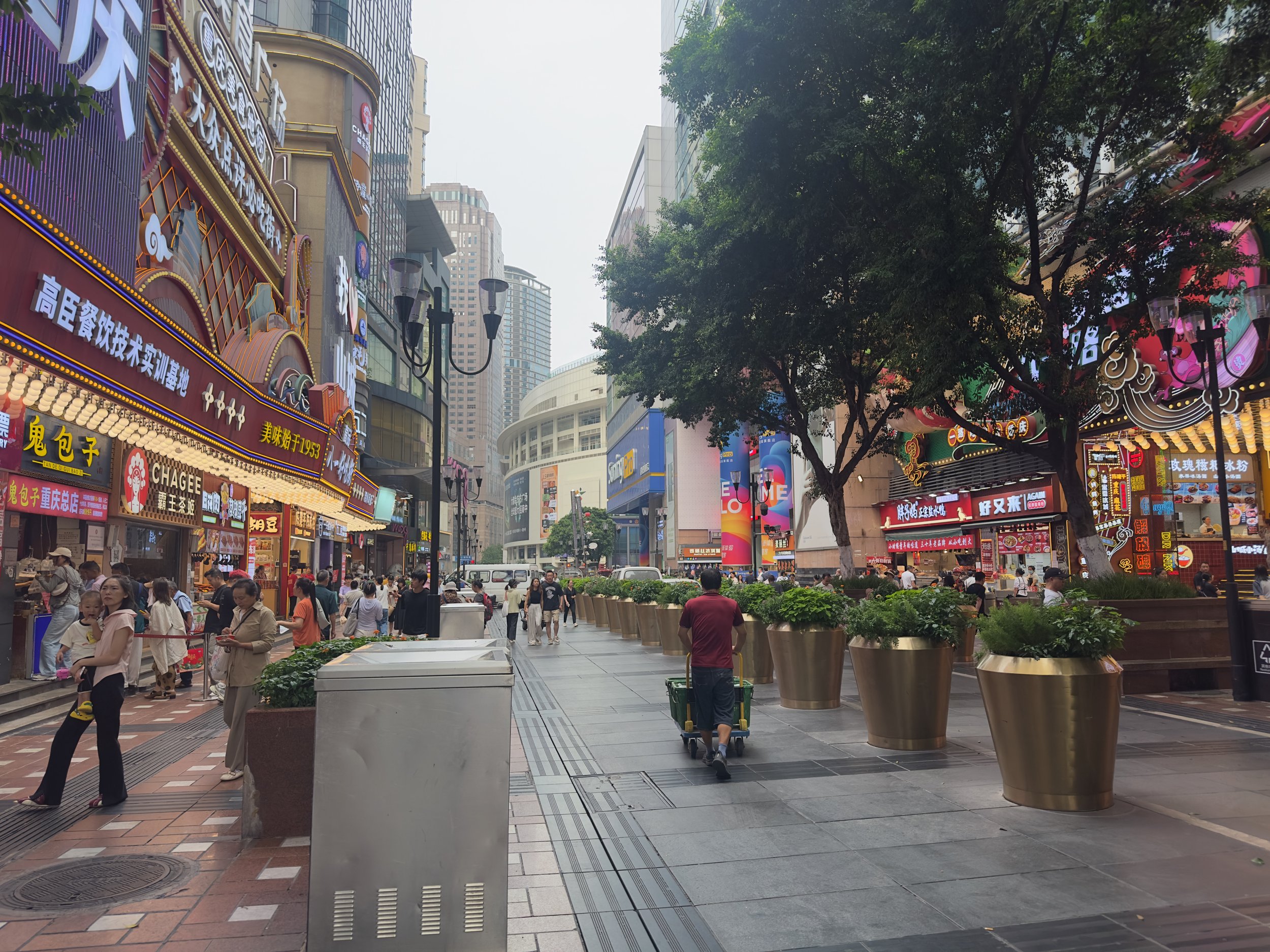
We walked the shopping area, then walked along to Jiaochangkou metro station entrance then back again, got an icecream and walked around some more ( a few spits of rain which helped to cool things down but it was still quite muggy ). This area is very nice but a bit like Nanjing East Rd in Shanghai it was not really our type of shops ( mainly western style clothing, makeup, etc ). Walked back to the hotel at 5pm for a rest.
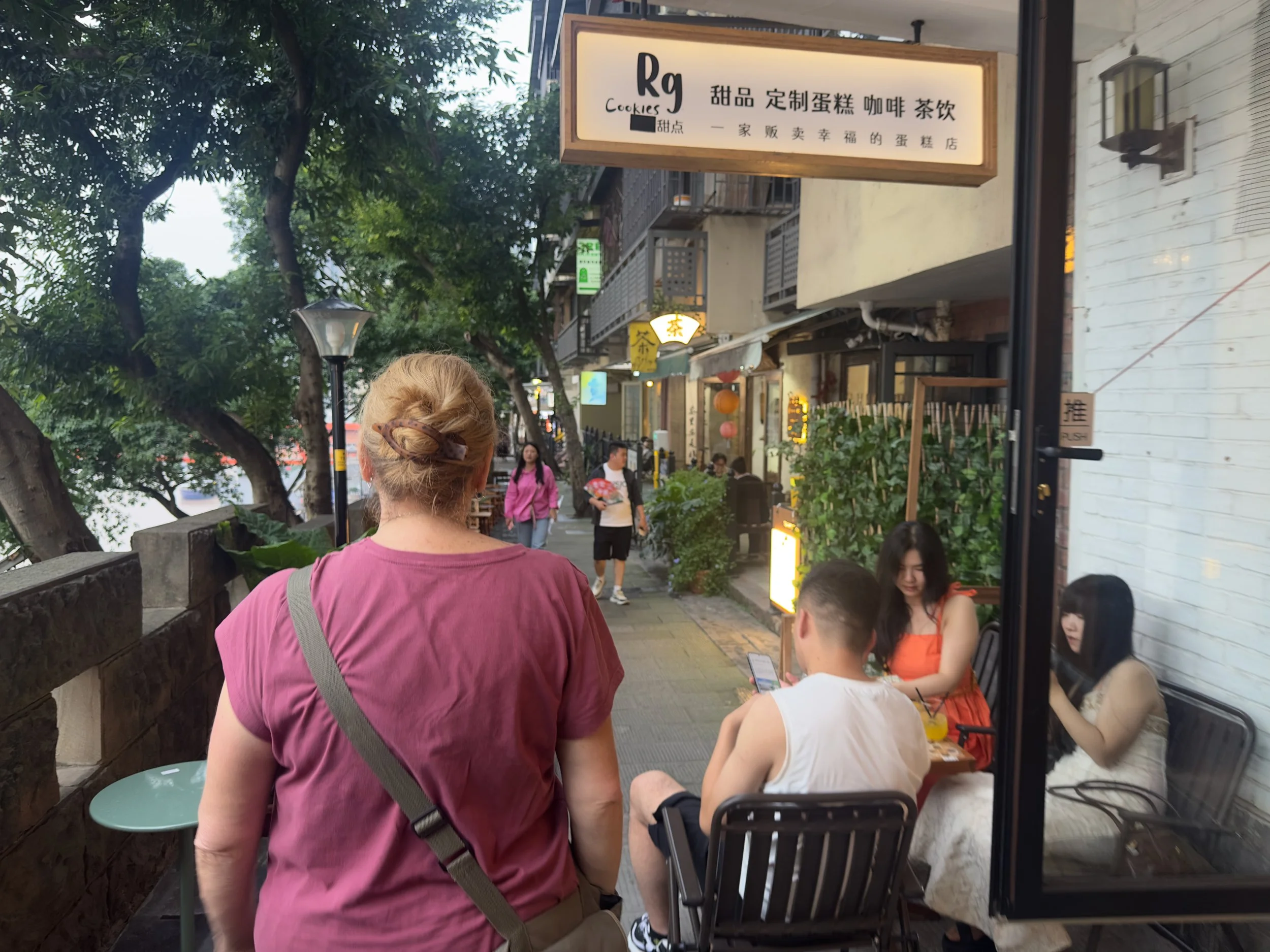
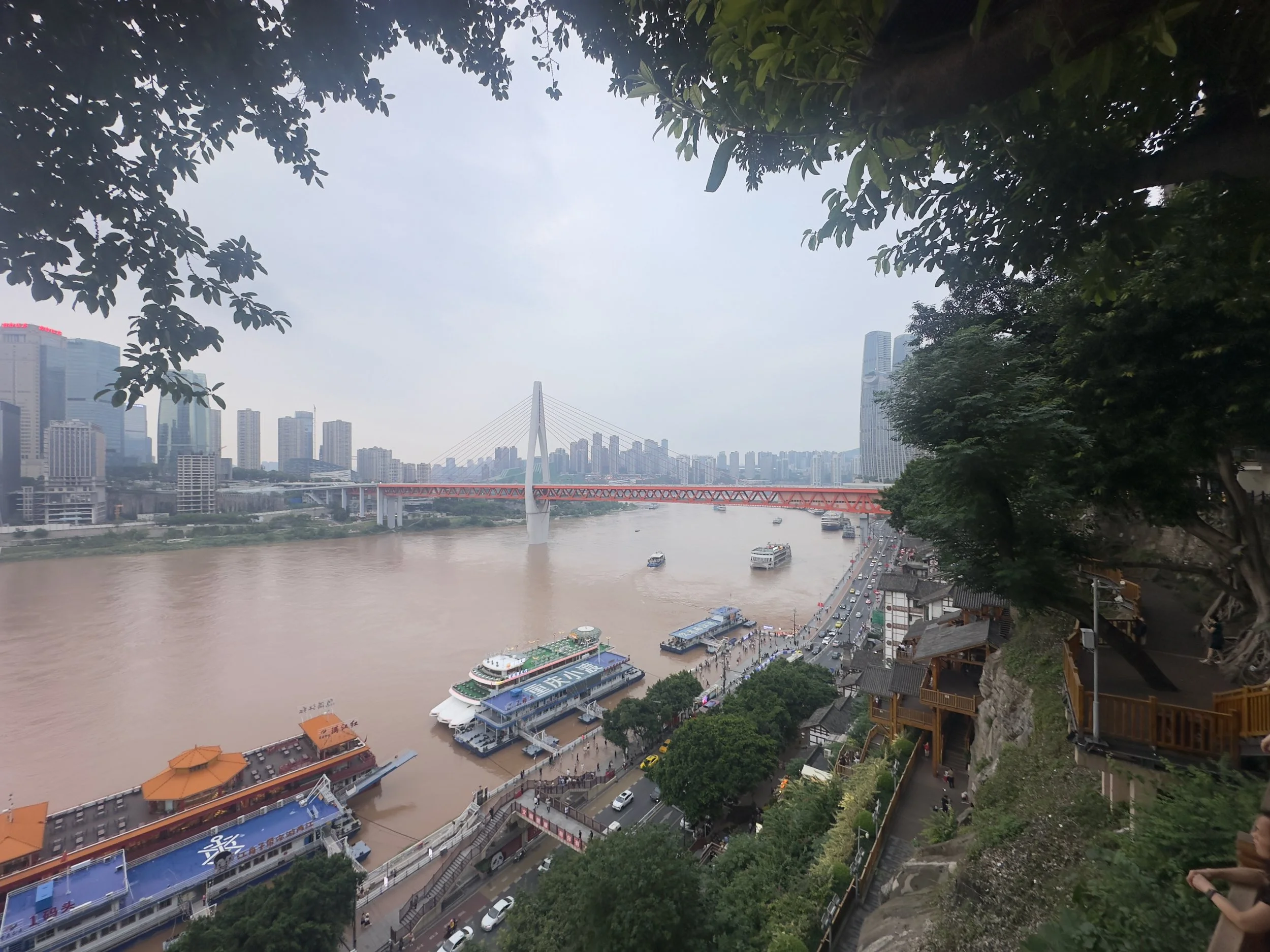
Out again at 5:45pm, walked down behind our hotel and along the cliff edge with its narrow alleys and cafes and restaurants to the Hongyadong ( aka Hongya Cave ) complex.
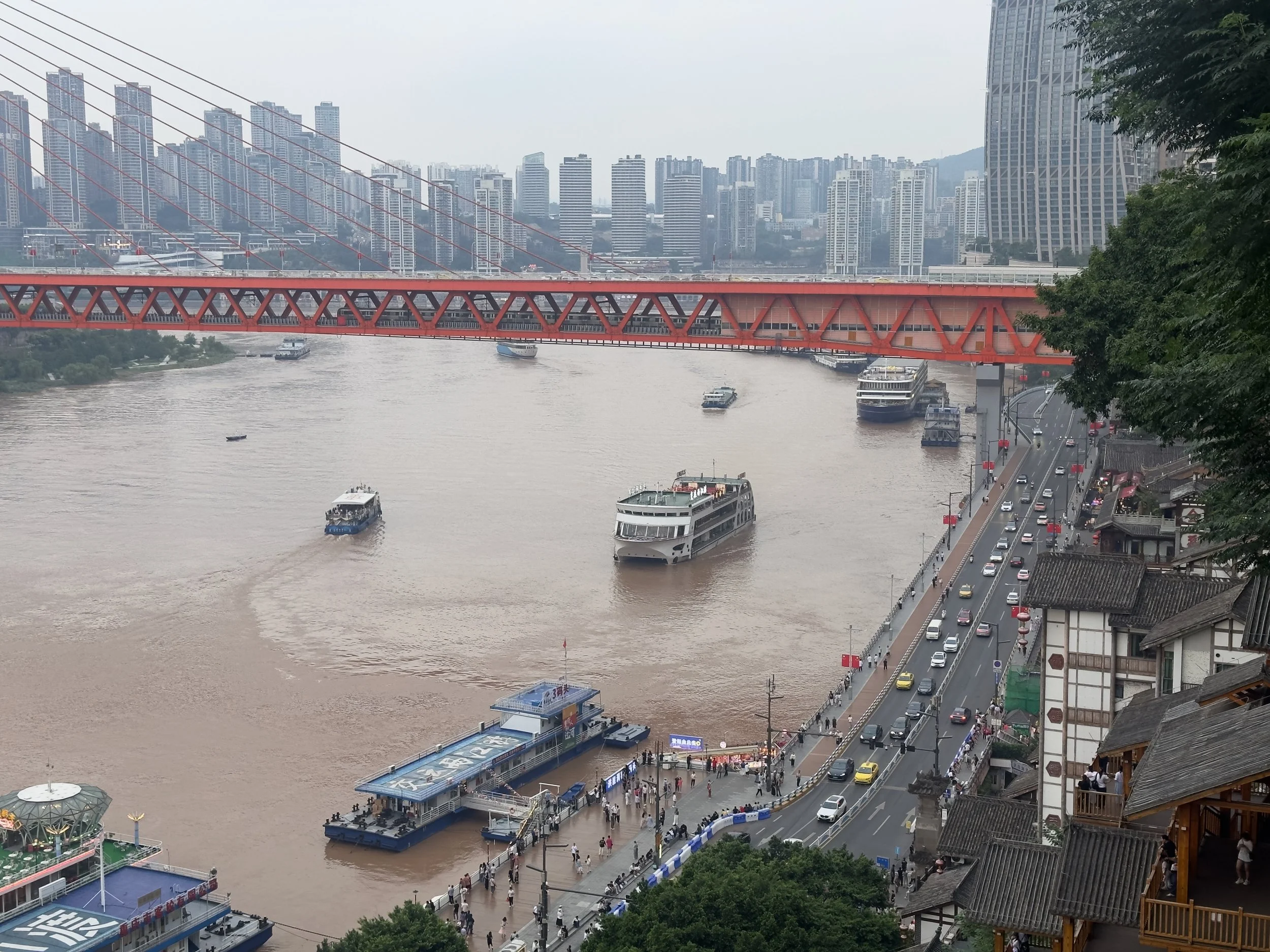
Hongyadong is an 11 story shopping complex that, due to the topography of the area, has it’s top floor level with the ground floor of our hotel and it’s lowest floor level with the river below ( the lowest floor has access to the wharfs where the boat cruises leave from ). The complex also steps down the cliff so some of the floors are design to be ‘streets’ open to the sky above, and others are more enclosed ‘mall’ type areas. It is quite hard to explain, and a bit confusing to walk through as well, as sometimes you think you are at the lowest level as you are now in a street only to find you are still 3 floors above the ground level. We chose to start at the top level and work our way down, which was a good choice until we tried to come back up. More about that later.
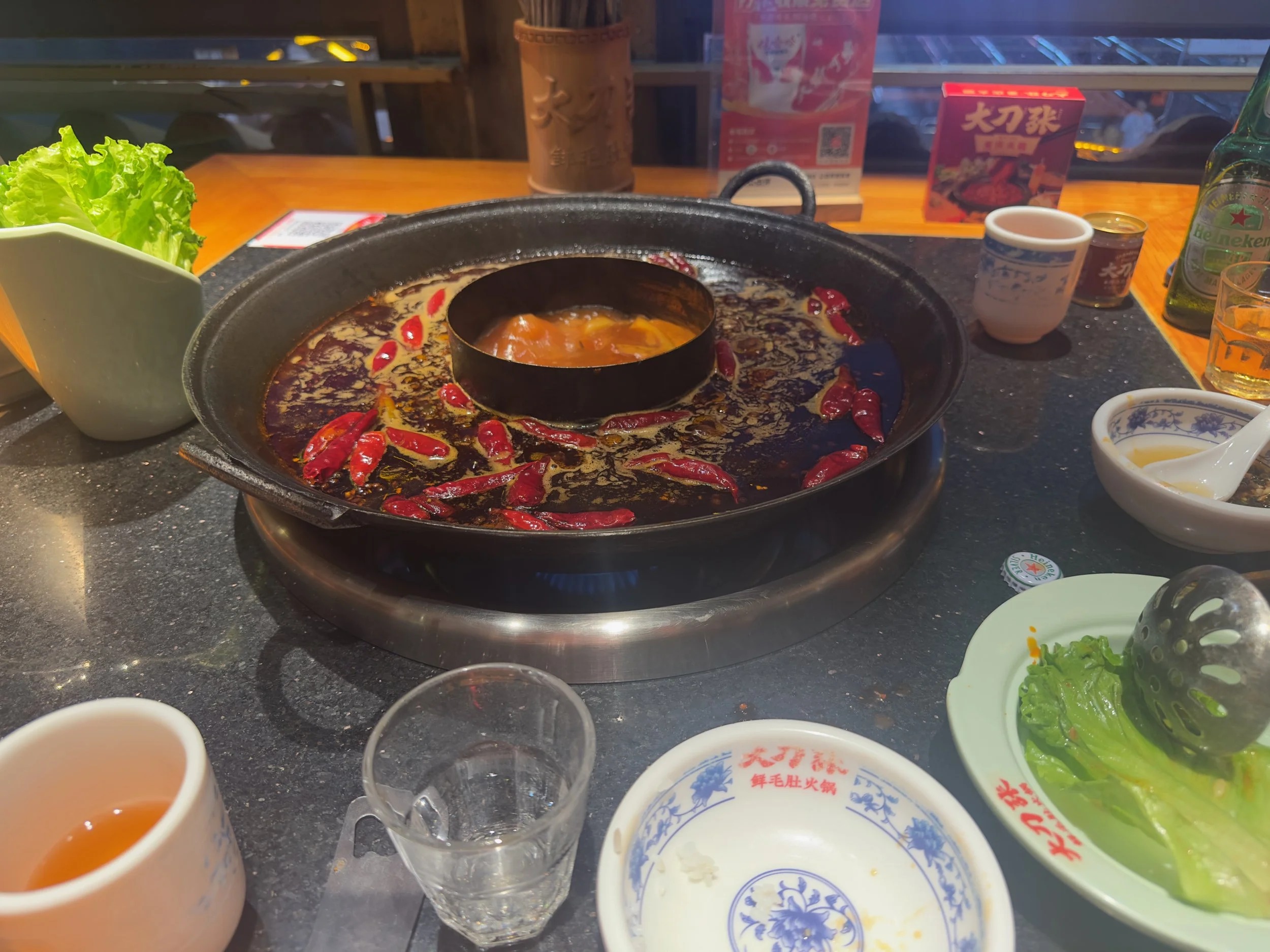
We decided to get dinner first and we chose to go with the local specialty ( Chongqing Hotpot ) at the first hotspot restaurant we saw. Hotpot consists of specialised tables setup with a gasburner and a metal bowl/pan ( the hotpot ) set into the table. The hotpot has oil in it and you order various ingredients from the menu and cook them yourself in the hotpot, and you can add condiments ( garlic, herbs etc ) to your bowl for when you fish our the cooked food. It took a bit of explaining/confusion by our poor waitress to get us to understand what we needed to order, how the ingredient were put together, how hot ( spicy ) the chilli oil was going to be etc but we got there eventually. The cost all up was Y148 so not cheap given that we ordered some beef, bokchoi and a few other vegetables and 2 beers. And we had to cook it ourselves! But it was very nice, and we had a view out the window of the ‘sunset’ as we ate ( it was cloudy ).
Now is a good time to mention that we were now 1400kms west of Shanghai, but all of China is on the same time zone. The effect of this is that the sunset in Shanghai on this day was at 5:35pm, but in Chongqing the sunset was at 6:35pm.
We entered Hongyadong and walked down through the complex. Every floor had a different feel, some were restaurants while others were streets with market stalls etc. Some of the floors were unused/empty and the connects between floors felt a bit random; some had stairs between them , some had escalators and the stairs and escalators were not al located in the same places on each floor. That said there were 2 main stairwells with lift that ran right up the 11 floors, but we noticed as we walked down the complex that there were a lot of people using the lifts and they seemed overcrowded. Parts of the complex really sold the ‘old style building’ feel, with traditional looking buildings, but then the next floor would be bare concrete and steel which made it feel very disjointed.
As we wandered down through the complex, I bought an ice cream sundae in a tin cup for Y19 ( this was similar to the one I bought in Xian with a drawing on the side of it with scenes of the city, and what became a short-lived idea to buy one in every city we went to…. I never saw another tin cup ice cream for the rest of the trip ). The complex wasn’t too busy undtil we got to the lower couple of floors and the met the hordes of tourists.
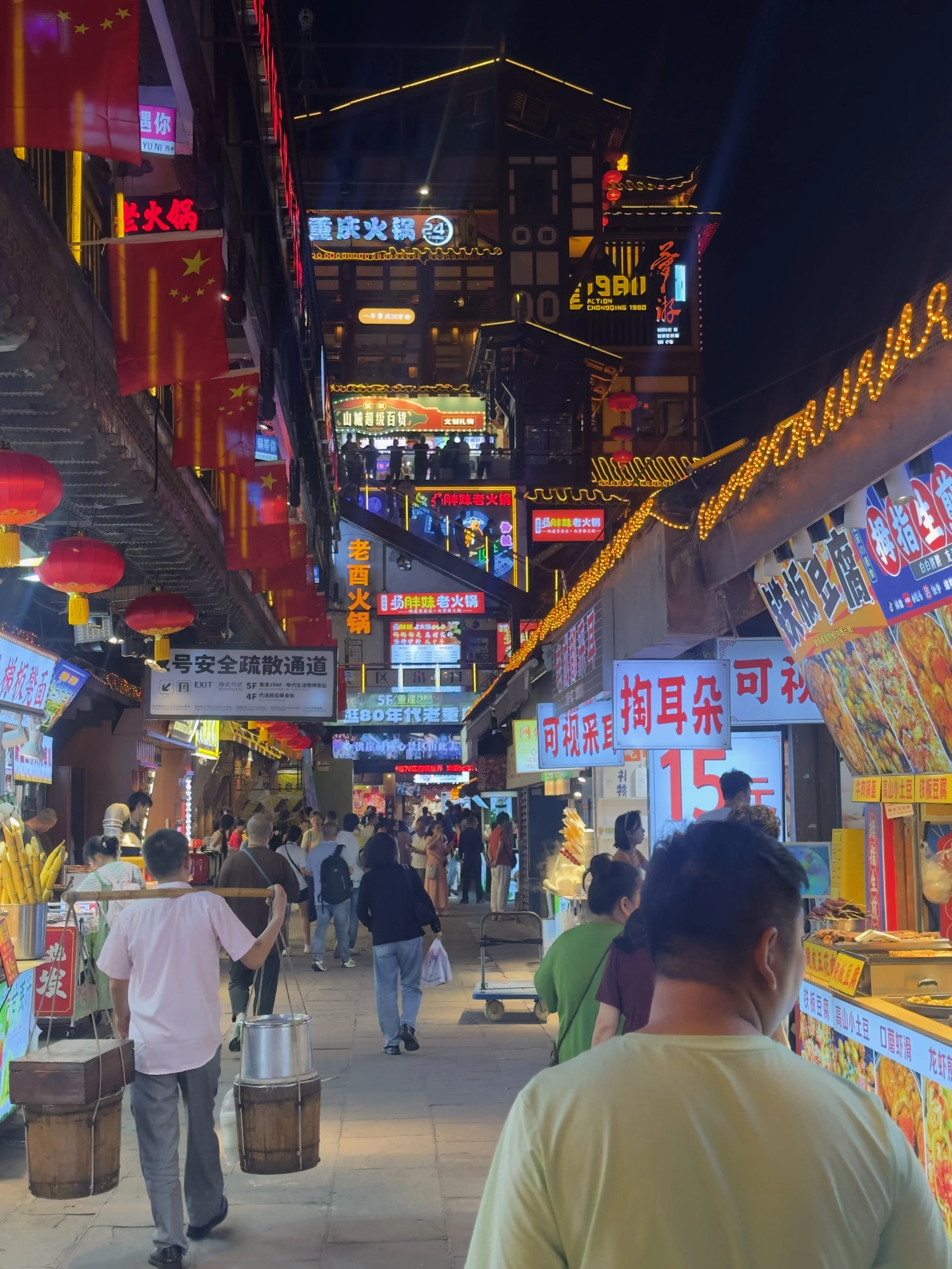
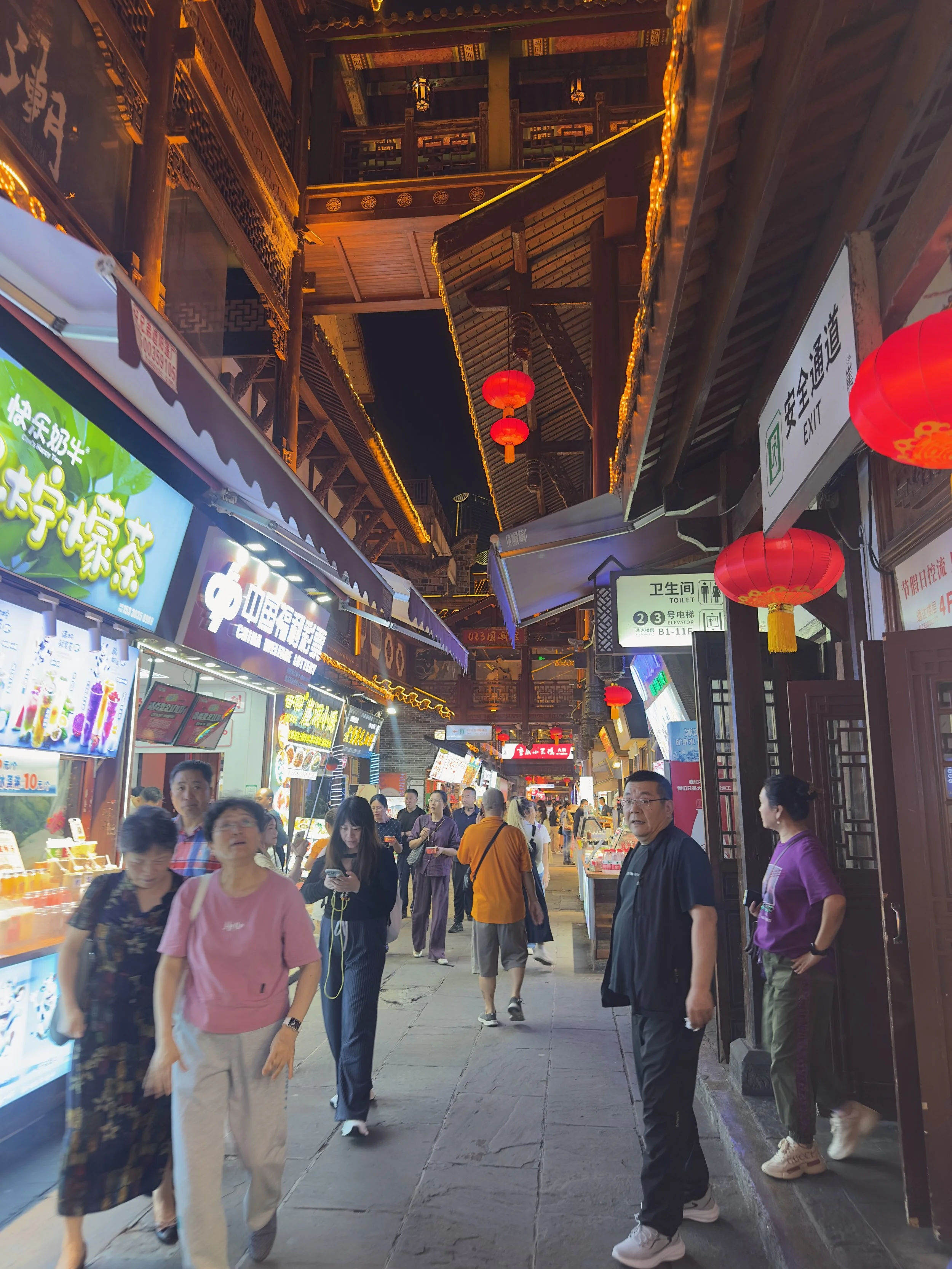
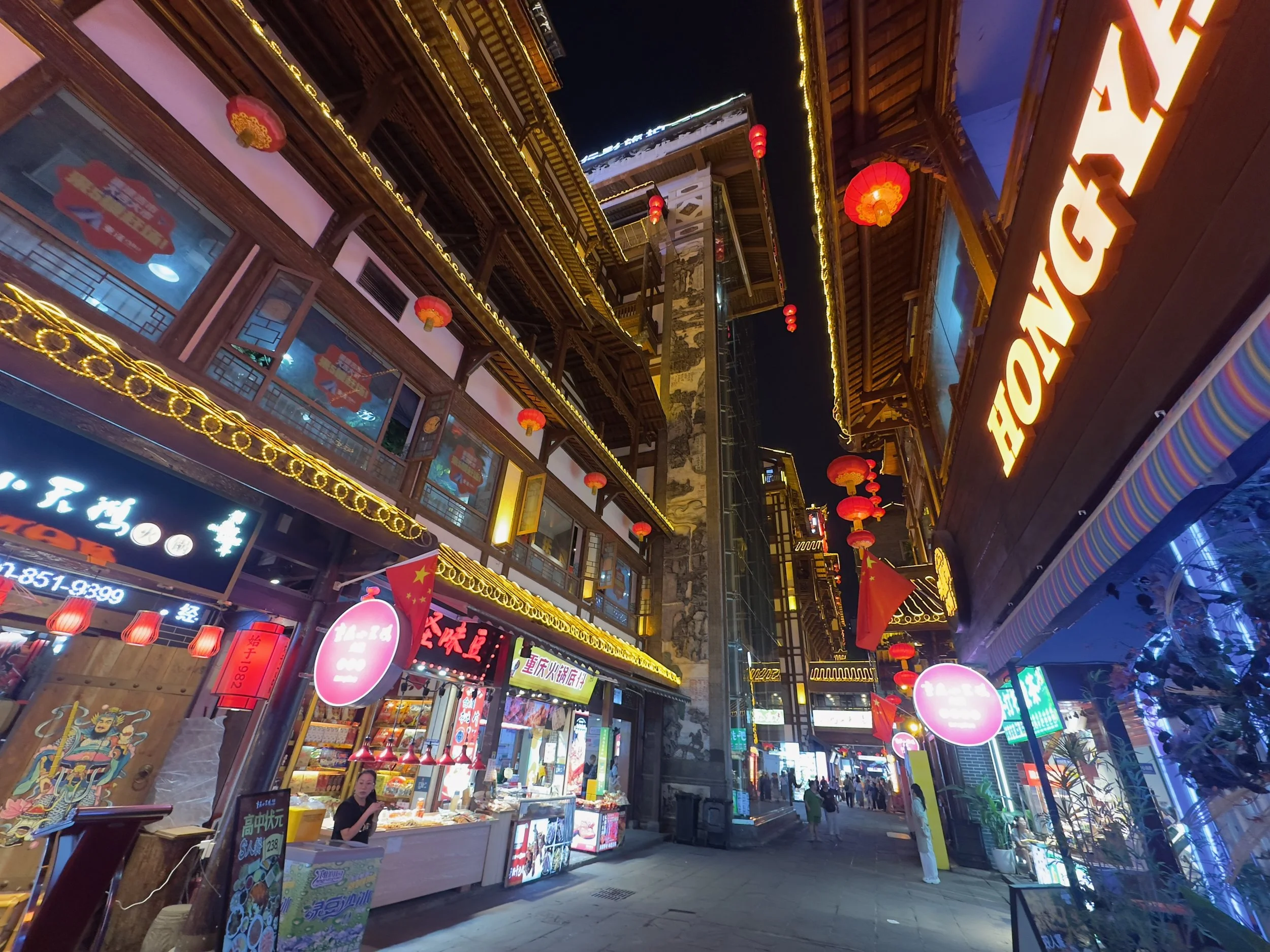
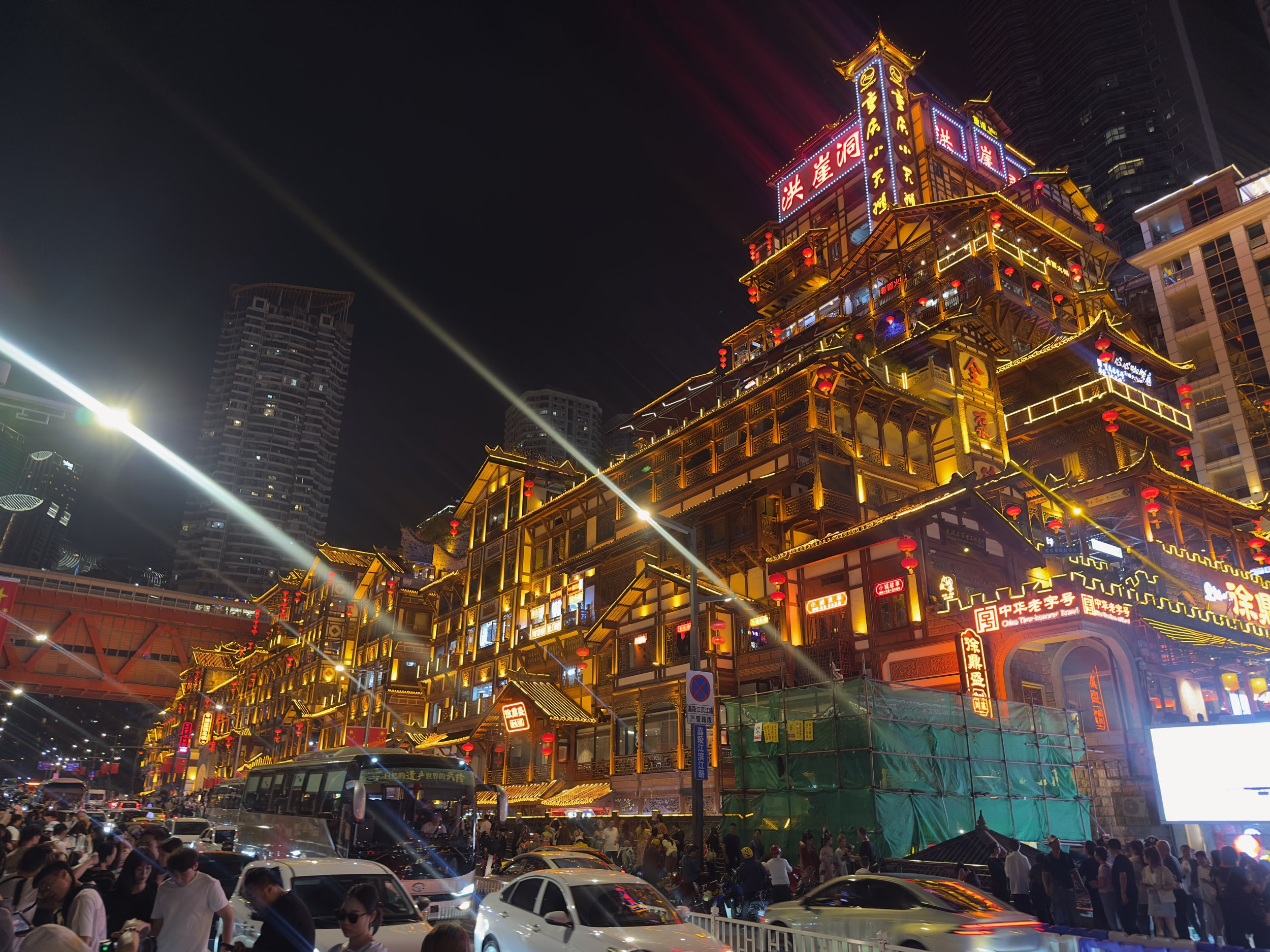
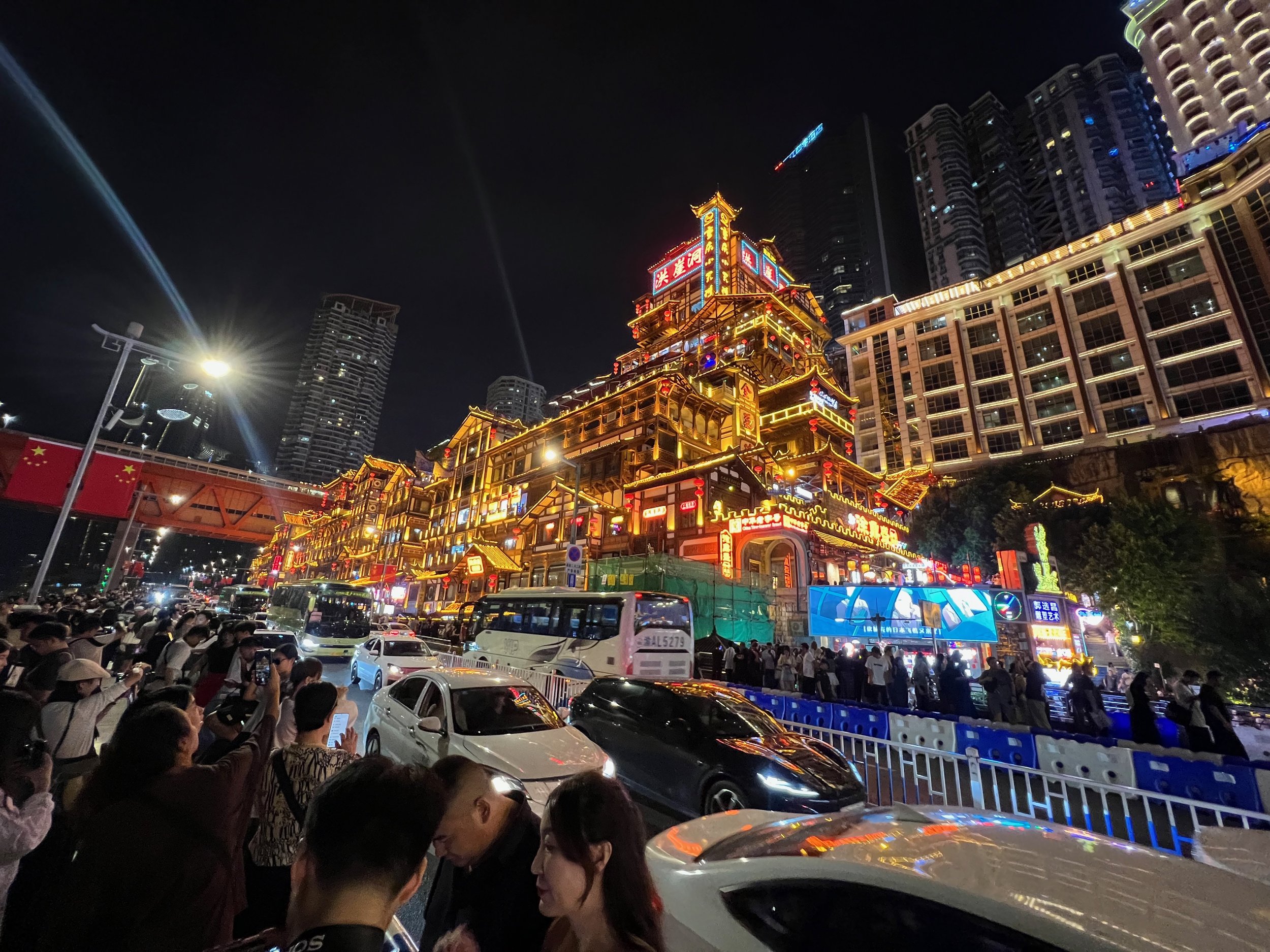
We walked under the road ( the road is too busy to have crossings ) and onto the footpath on the other side at 7:30pm, where there were crowds similar to a football match filling the footpath. In fact they had recently widened the footpath to accommodate the sightseers that come to look at the building from the riverside, especially at night when the building is lit up.
We fought our way through the photo/selfie taking crowds, mixed with people selling things, and walked back in the direction of our hotel. We kept walking along the road that ran next to the river in the hope that we would find a lift or escalators in one of the many buildings to take us back up the 11 floors to our hotel. We didn’t find any. After about 20 minutes we turned around and walked back to Hangyadong, through the crowds and back into the complex. We tried to use the lifts but they were full everytime they stopped at our floor so we used the escalators and stairs ( it was too hot to be climbing stairs even at 8pm ) to get back up to the top of the complex and our onto Linjiang Rd and 5 minutes back to the hotel
Walked back into the hotel at 8:45pm. Rested.
Zoomable Map ( pin is located on the Walling Hotel )